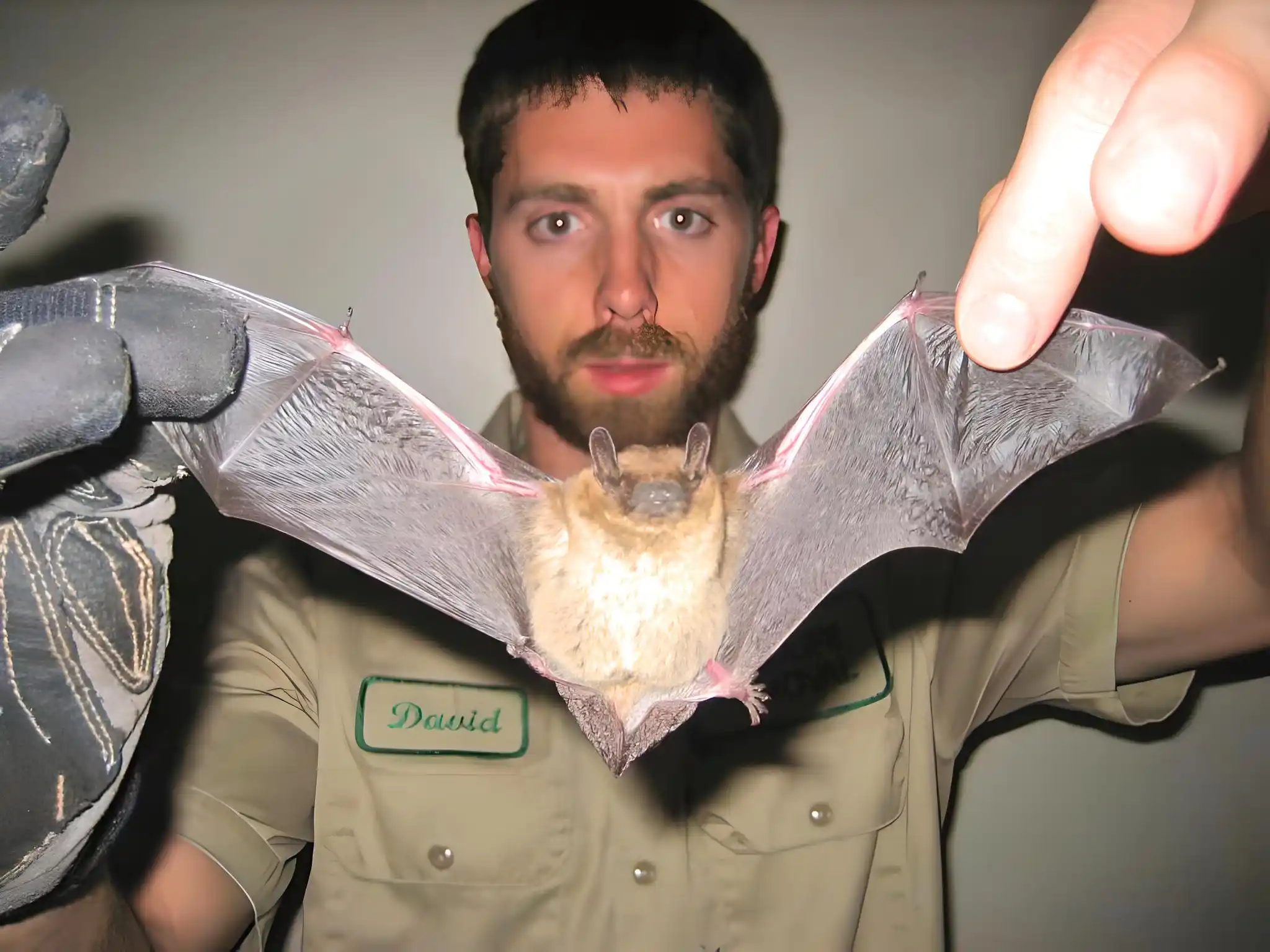
Bats are commonly active this month
Watch for chirping at dusk, scratching above bedrooms, and dark stains at roof junctions. Common pattern: guano.
Watch for chirping at dusk, scratching above bedrooms, and dark stains at roof junctions.
Bats are not all the same problem. Maternity timing, building style, and the specific entry point change the right response. Here is how we think about bat in North Alabama.
Bats roosting in your attic are protected by federal and state law — they cannot simply be killed or trapped. We use one-way exclusion devices that let bats leave at dusk but prevent re-entry, then seal every entry point down to 3/8 of an inch.
Most North Alabama colonies are big brown bats or evening bats. Colonies enter through gaps as small as 3/8 inch around ridge caps, gable vents, soffit returns, and chimney flashing.
Maternity season runs roughly May through July; full exclusion is typically performed outside that window. We can stabilize and prep during maternity season, then complete exclusion after.
Bats are in their seasonal peak in North Alabama. Call volume rises sharply during these months, so inspection slots book ahead.
Most bats calls in North Alabama begin with sounds in the structure: chirping at dusk, scratching above bedrooms, and dark stains at roof junctions. The pattern, timing, and location of the sound — early morning, late evening, above the bedroom, behind a wall — narrows the species before an inspection even starts.
Beyond the sounds, the visible signs we look for are guano accumulation, insulation contamination, soffit staining, and ridge-vent gap widening. These patterns are diagnostic — they tell us where the entry sits and how long the activity has been going on.
Bats can carry histoplasmosis and rabies, so droppings, nesting material, and contaminated insulation need to be handled with the right gear. Most direct-contact incidents happen during attempted DIY removal, not during accidental encounter.
Call when you confirm two of: repeated sounds at the same time of day, visible droppings, damage to vents or soffits, or a sighting. Most North Alabama bat jobs schedule within 24–48 hours of the inspection.
If two or more of these match what you're seeing or hearing, call us — we can usually identify the species over the phone before sending a truck.
The longer bats stay, the more the bill grows. These are the patterns we see on inspection:
When damage involves insulation or contamination, see our attic restoration process — that's how we leave the space safe to live in.
Histoplasmosis (a respiratory fungus from old guano) and rare rabies exposure. Direct skin contact with bats or guano should always involve professional PPE.
Concerns we plan around on this species: histoplasmosis , rabies .
The North Alabama towns below see this work most often. Pick the nearest for local context — entry points and timing vary by town.
Many calls that start as bats turn out to involve more than one species — or share entry points with these:
Watch for chirping at dusk, scratching above bedrooms, and dark stains at roof junctions. Common pattern: guano.
Watch for chirping at dusk, scratching above bedrooms, and dark stains at roof junctions.
Squirrels, rats, mice, and raccoons all begin shelter-seeking for winter in September. This is the highest-leverage inspection month of the year — sealing entry points before October prevents the rest of the season's ca…
Watch for scratching in walls at dawn, scampering above the ceiling, and chewed soffit corners.
We handle squirrels, raccoons, bats, skunks, snakes, birds, moles, armadillos, and other nuisance wildlife common to Alabama homes.
Yes. All removal methods are humane and designed to safely evict animals without unnecessary harm whenever possible.
Yes. We locate and seal entry points to prevent animals from returning after removal.
Absolutely. Attics and crawlspaces are common nesting areas, and we specialize in safely removing wildlife from these spaces.
Avoid disturbing the area and call us right away. Scratching sounds often indicate squirrels, raccoons, or bats.
Yes. We offer cleanup and sanitation services to remove droppings, nesting materials, and contaminated insulation.
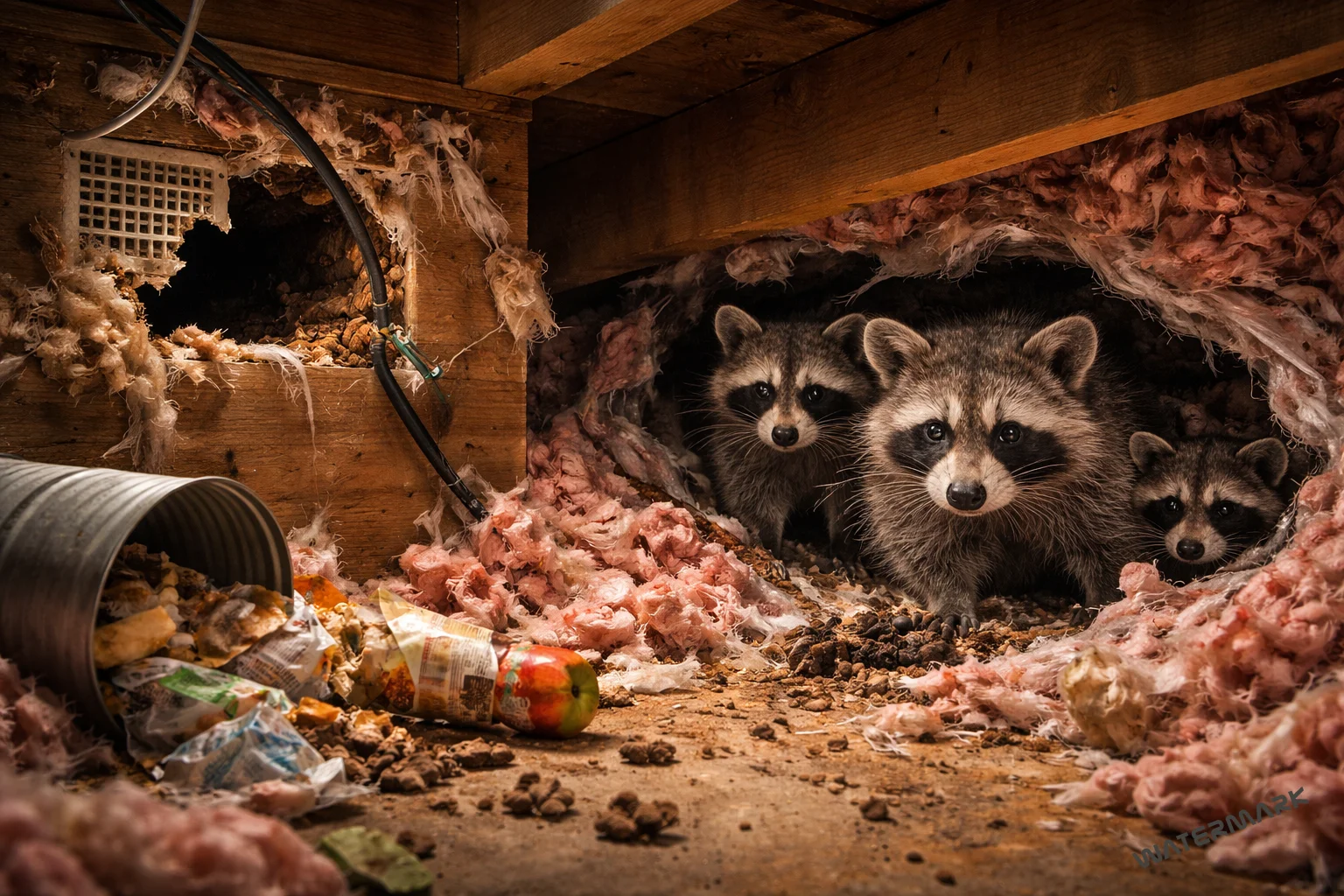
Learn to identify the telltale signs of raccoon activity in your attic, from nocturnal sounds to physical damage, and understand why profes…
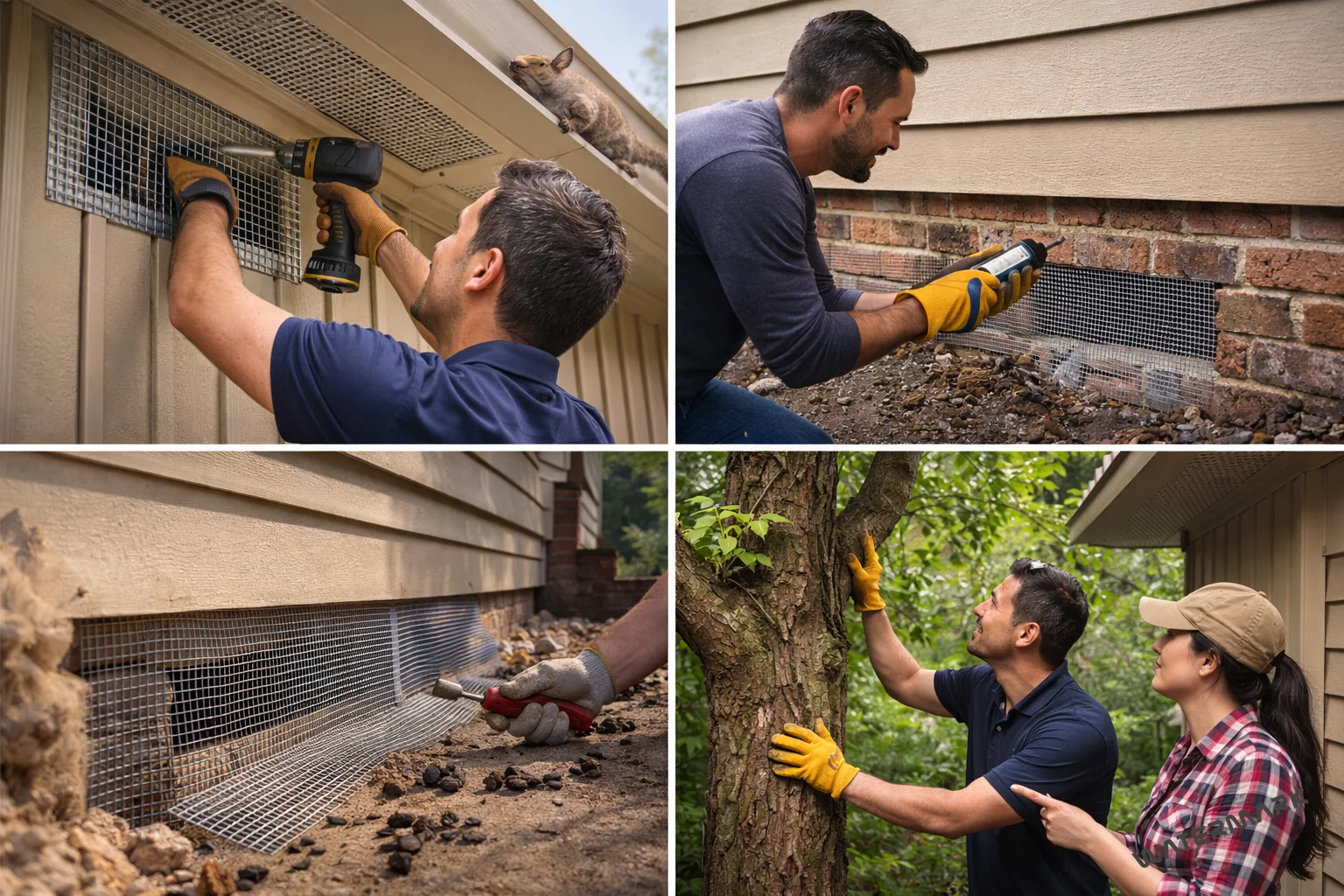
Discover effective strategies to keep squirrels out of your home, including property maintenance, entry point sealing, and why professional…
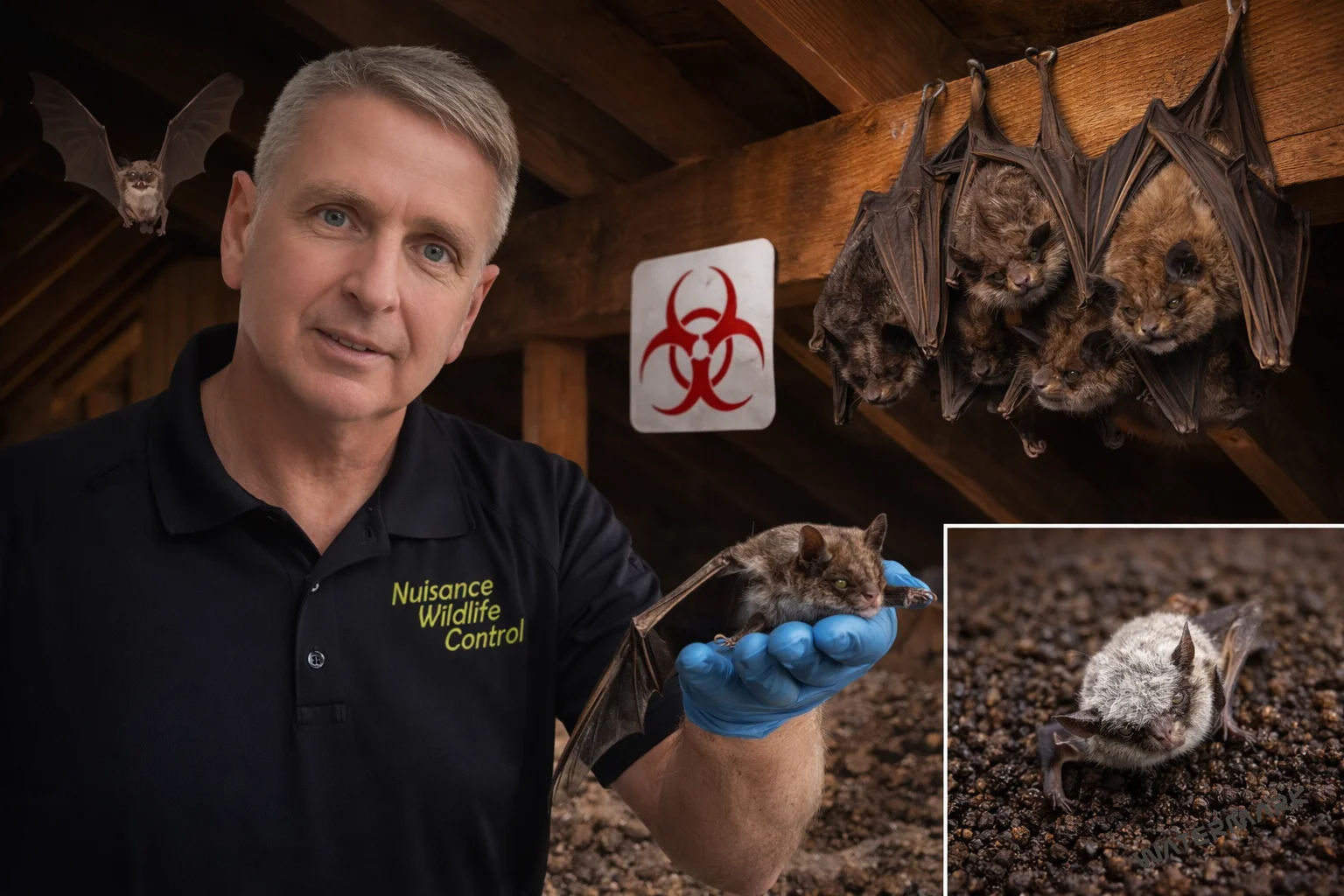
Understanding the serious health risks and legal considerations of bat removal, and why attempting DIY solutions can endanger your family a…
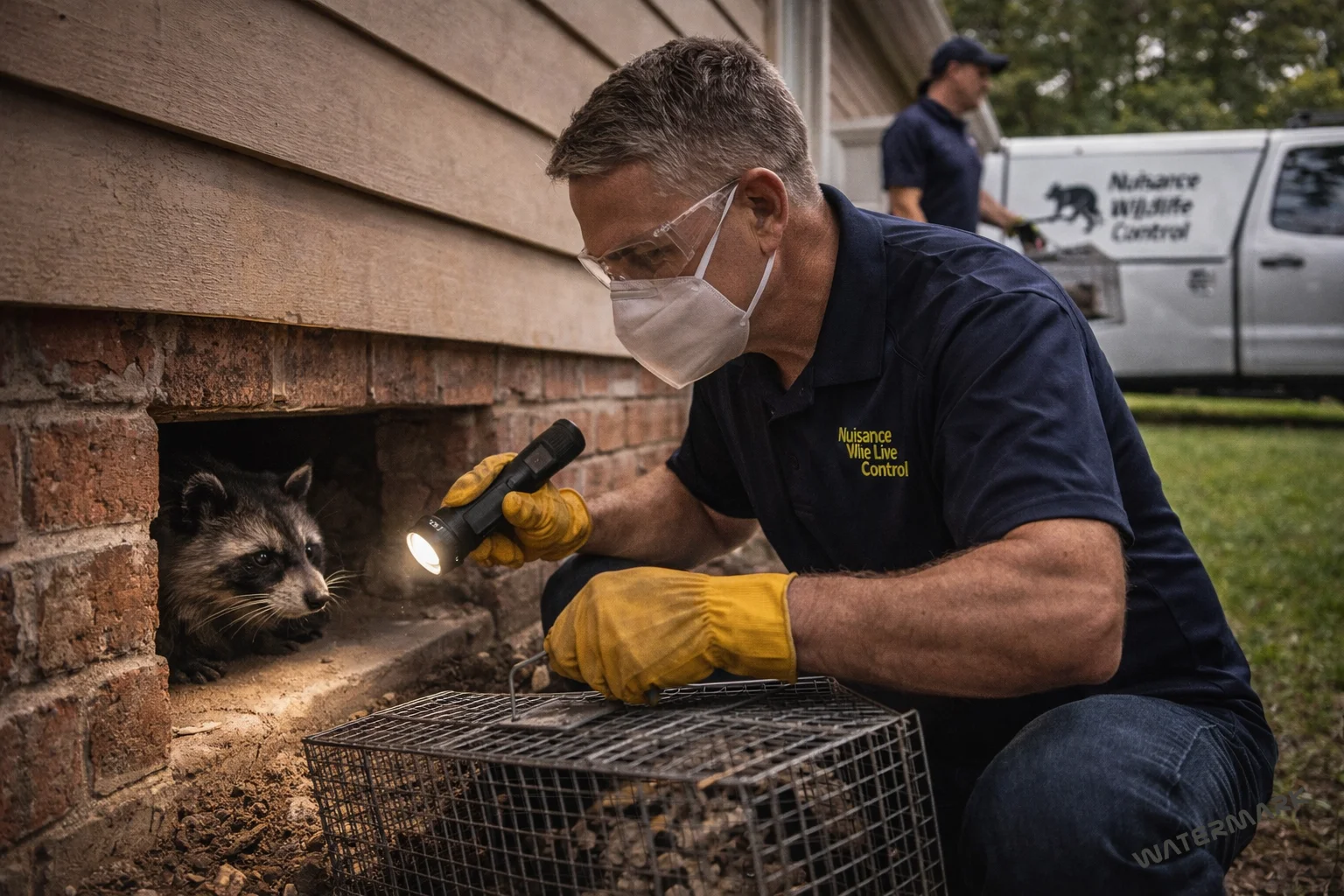
Learn to recognize situations where professional wildlife control is essential rather than optional, protecting your family's safety, …
Most jobs scheduled within 24–48 hours.