Skunks in North Alabama — Removal, Damage, Prevention
After forty years on skunk jobs in North Alabama, we have learned what actually works on skunk — and what wastes a homeowner's money. This page lays it out.
🦝 42+ years in North Alabama🛡️ Licensed Alabama NWCO · insured🤝 Humane removal · family-owned⏱️ Most jobs scheduled in 24–48 hrs
About skunks in North Alabama
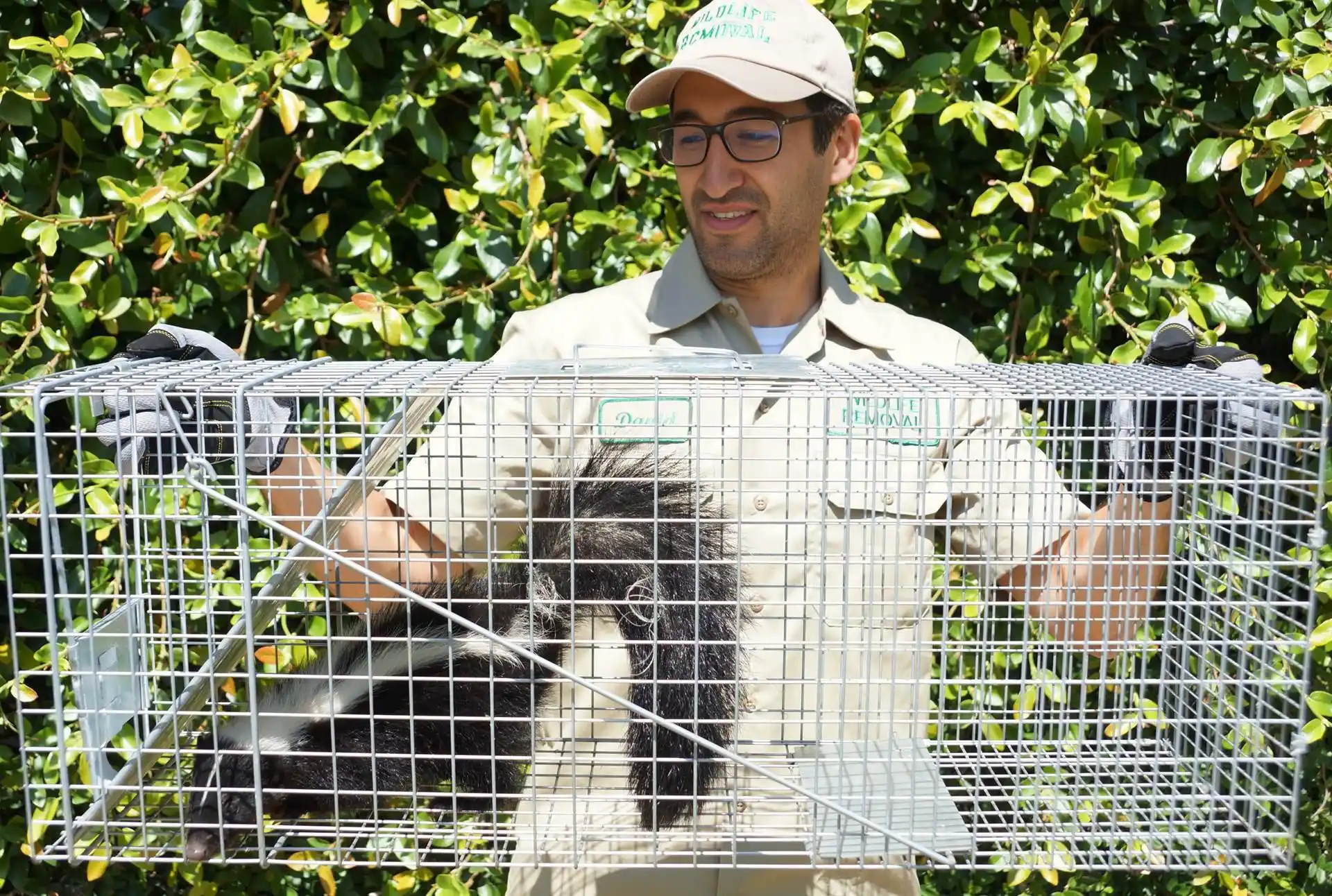
Skunks dig dens under decks, porches, and outbuildings, and they will spray when threatened. We use careful trapping and exclusion barriers that block re-entry without confrontation, and we address odor concerns from previous activity.
Biology & behavior
Skunks dig dens under decks, sheds, and outbuildings. They are slow-moving but will spray defensively from up to 10 feet. Their digging follows grubs and earthworm activity.
When this happens
Mating runs Feb–Mar (peak spray complaints), kits born April–May. Yard digging spikes in late summer when grubs are large.
What's included on a skunk removal job
Spray-aware trapping methods
Buried exclusion barriers under decks
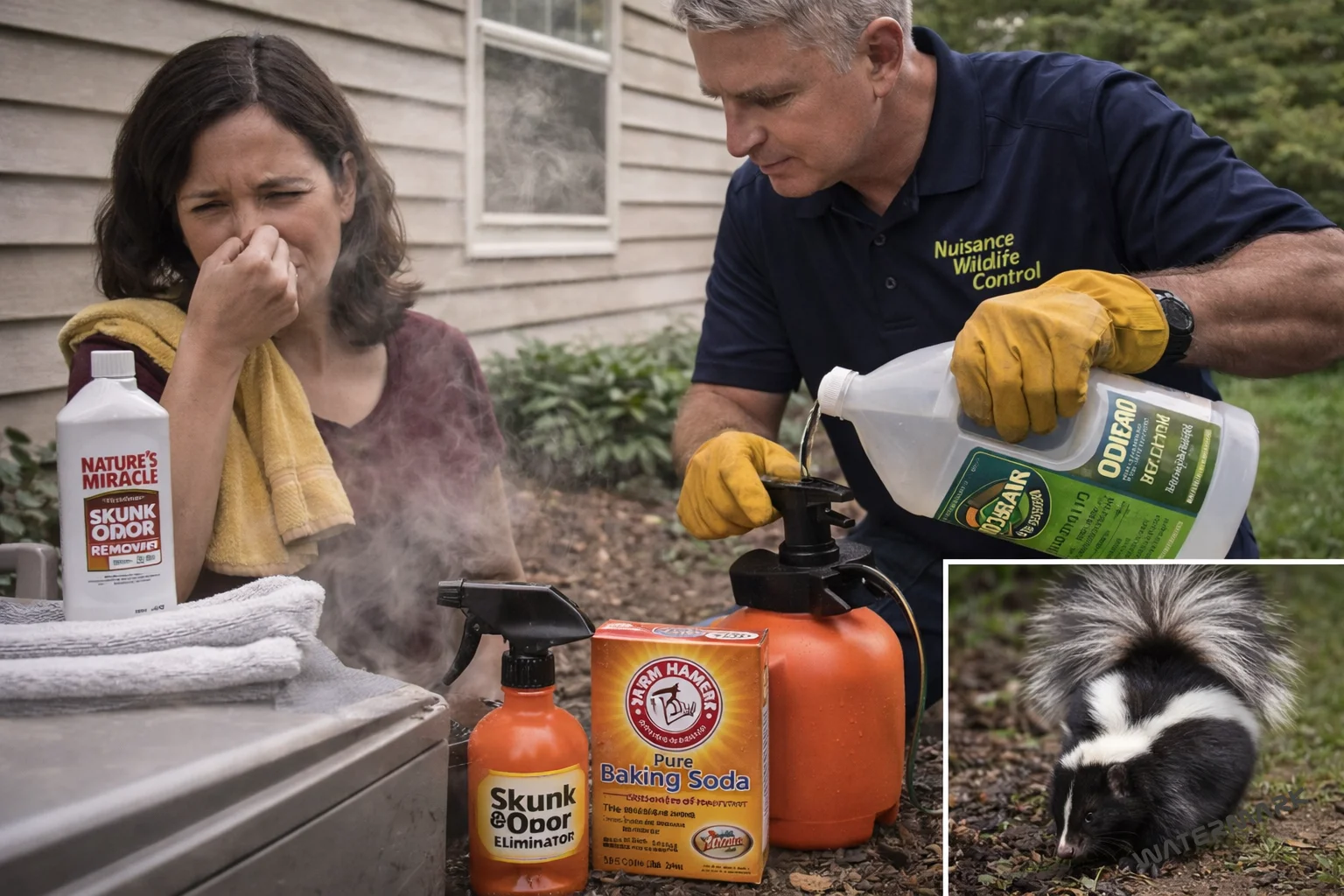
Odor mitigation guidance
Yard prevention and grub-source advice
Quick reference
Fast answers about skunks in North Alabama
What is happening this month
Skunks are in their seasonal peak in North Alabama. Call volume rises sharply during these months, so inspection slots book ahead.
What skunks sound like
Most skunks calls in North Alabama begin with sounds in the structure: musky odor at night, small cone-shaped holes in lawn, and scratching under decks. The pattern, timing, and location of the sound — early morning, late evening, above the bedroom, behind a wall — narrows the species before an inspection even starts.
Visible signs of skunks
Beyond the sounds, the visible signs we look for are deck undermining, shed-floor digging, lawn divots from grub foraging, and foundation soil disturbance. These patterns are diagnostic — they tell us where the entry sits and how long the activity has been going on.
Are skunks dangerous to homeowners
Skunks can carry rabies, leptospirosis, and canine distemper, so droppings, nesting material, and contaminated insulation need to be handled with the right gear. Most direct-contact incidents happen during attempted DIY removal, not during accidental encounter.
When to call about skunks
Call when you confirm two of: repeated sounds at the same time of day, visible droppings, damage to vents or soffits, or a sighting. Most North Alabama skunk jobs schedule within 24–48 hours of the inspection.
Entity signals
Skunks — biological and structural signals
Sounds homeowners hear
scratching under decks
Odor signals
musky odor at night
Entry points to inspect
Deck gaps
Shed undercuts
Porch skirting
Crawlspace vents
Exposed foundations
Where they nest
Under deck denning
Visible damage patterns
deck undermining
shed-floor digging
lawn divots from grub foraging
foundation soil disturbance
spray residue on siding
Health risks
Rabies
Leptospirosis
Canine distemper
Seasonal activity windows
Peak: Feb, Mar, Apr, May, Aug, Sep
Signs you may have skunk activity
If two or more of these match what you're seeing or hearing, call us — we can usually identify the species over the phone before sending a truck.
Musky odor at night
Small cone-shaped holes in lawn
Scratching under decks
Skunk visible at dusk
Dog sprayed near porch
Tunneling along foundation
Damage we typically find
The longer skunks stay, the more the bill grows. These are the patterns we see on inspection:
Deck undermining
Shed-floor digging
Lawn divots from grub foraging
Foundation soil disturbance
Spray residue on siding
When damage involves insulation or contamination, see our attic restoration process — that's how we leave the space safe to live in.
Health & safety risks
Rabies is a real concern in skunks across the Southeast; any daytime activity or unusual tameness warrants immediate professional handling.
Concerns we plan around on this species:
rabies
, leptospirosis
, canine distemper
.
How a skunk job runs
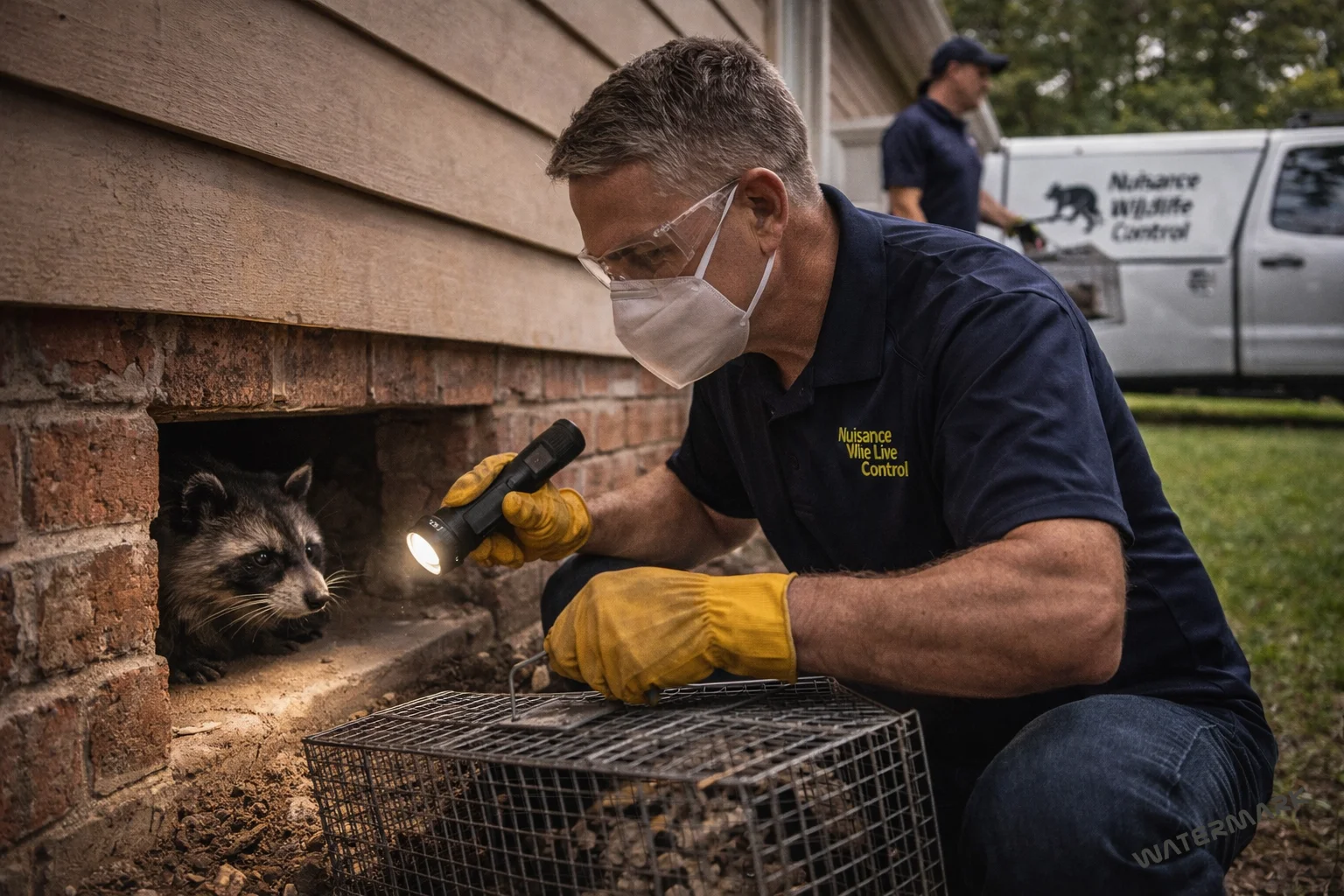
Inspection. Roofline, soffits, vents, foundation, crawlspace. Every entry point gets documented before anything else happens.
Removal.
Species-appropriate method — never one-size-fits-all. Tarp-covered live traps (spray prevention), 1/2" hardware cloth buried 12 inches deep, L-shaped exclusion barriers, deodorizing agents for active spray events.
Sealing. Hardware cloth, metal flashing, or matched replacement materials. No foam-only "fixes" that fail in six months.
Cleanup. Droppings, nesting material, contaminated insulation — handled with the right gear and disposal.
Follow-up. We return to confirm the exclusion held and address anything missed.
Where we run skunk trapping jobs
The North Alabama towns below see this work most often. Pick the nearest for local context — entry points and timing vary by town.
Squirrels, rats, mice, and raccoons all begin shelter-seeking for winter in September. This is the highest-leverage inspection month of the year — sealing entry points before October prevents the rest of the season's ca…
Watch for scratching in walls at dawn, scampering above the ceiling, and chewed soffit corners.
Open species guide →
FAQs
Common skunk questions
We handle squirrels, raccoons, bats, skunks, snakes, birds, moles, armadillos, and other nuisance wildlife common to Alabama homes.
Yes. All removal methods are humane and designed to safely evict animals without unnecessary harm whenever possible.
Yes. We locate and seal entry points to prevent animals from returning after removal.
Yes. Our exclusion work focuses on preventing future infestations, not just removing the current animals.
Common signs include scratching noises, droppings, strong odors, damaged siding, and disturbed insulation.
Not if entry points are properly sealed. That is why exclusion and repair work is a critical part of our service.