🦝 42+ years in North Alabama🛡️ Licensed Alabama NWCO · insured🤝 Humane removal · family-owned⏱️ Most jobs scheduled in 24–48 hrs
About snakes in North Alabama
Most snakes around North Alabama yards are harmless rat snakes or king snakes — but copperheads and cottonmouths are real, and a wrong identification by the homeowner is the most common reason snake encounters go badly. We identify, remove safely, and recommend yard changes to make the property less inviting.
Biology & behavior
North Alabama hosts six venomous species (copperhead, cottonmouth, timber rattlesnake, pigmy rattlesnake, eastern diamondback, coral) but the vast majority of yard encounters are non-venomous rat snakes, king snakes, and racers. Snakes follow rodents and amphibians; they do not seek out humans.
When this happens
Activity rises April through October; peak yard encounters occur May–September. Cooler nights and warmer days drive snakes onto patios and driveways to thermoregulate.
What's included on a snake removal job
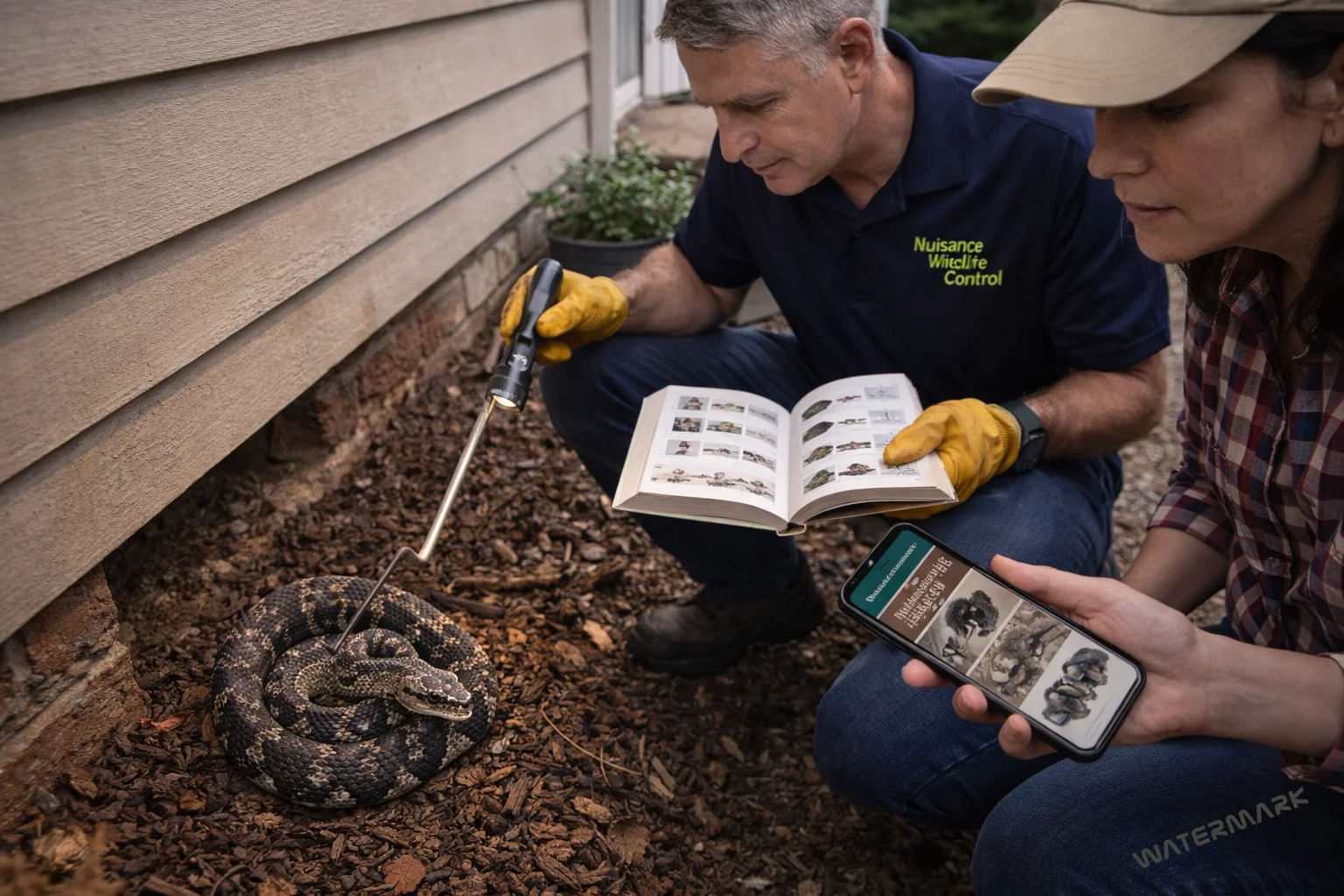
Positive species identification before removal
Safe handling of venomous and non-venomous snakes
Removal from boathouses, decks, garages, and crawlspaces
Snakes are in their seasonal peak in North Alabama. Call volume rises sharply during these months, so inspection slots book ahead.
Visible signs of snakes
Beyond the sounds, the visible signs we look for are minimal structural damage, psychological-distress, pet bite risk, and harborage colonization (multiple snakes). These patterns are diagnostic — they tell us where the entry sits and how long the activity has been going on.
Are snakes dangerous to homeowners
Snakes can carry envenomation risk misidentification, so droppings, nesting material, and contaminated insulation need to be handled with the right gear. Most direct-contact incidents happen during attempted DIY removal, not during accidental encounter.
When to call about snakes
Call when you confirm two of: repeated sounds at the same time of day, visible droppings, damage to vents or soffits, or a sighting. Most North Alabama snake jobs schedule within 24–48 hours of the inspection.
What homeowners should not do with snakes
Do not seal an entry point before confirming the animal is out — trapping a snake inside the structure creates an odor and decontamination problem worse than the original call. The entry points to watch are foundation gaps, crawlspace vents, and garage thresholds.
Entity signals
Snakes — biological and structural signals
Entry points to inspect
Foundation gaps
Crawlspace vents
Garage thresholds
Shed floor gaps
Boathouse decking
Where they nest
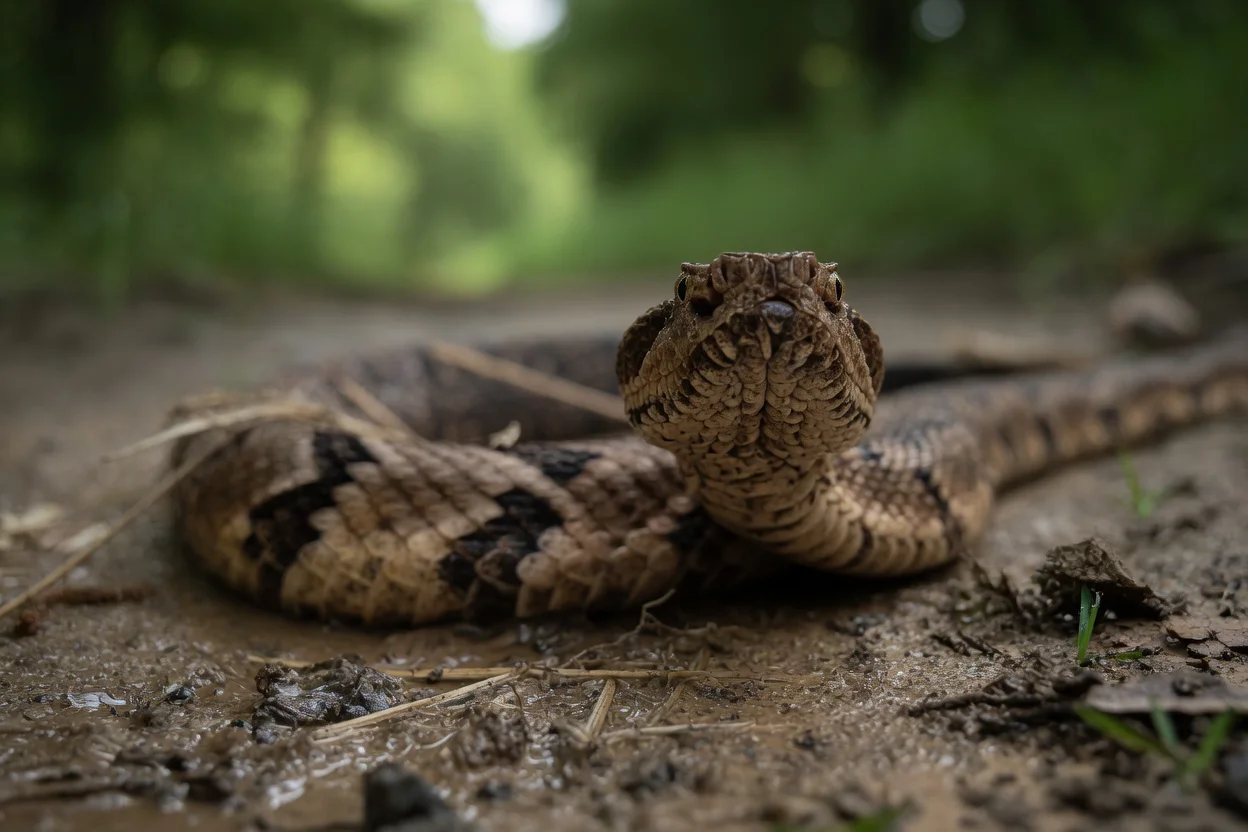
Copperhead identification
Cottonmouth identification
Non venomous misidentification
Crawlspace entry
Rodent attraction
Visible damage patterns
minimal structural damage
psychological-distress
pet bite risk
harborage colonization (multiple snakes)
Health risks
Envenomation risk misidentification
Seasonal activity windows
Peak: Apr, May, Jun, Jul, Aug, Sep, Oct
Off-season: Dec, Jan, Feb
Signs you may have snake activity
If two or more of these match what you're seeing or hearing, call us — we can usually identify the species over the phone before sending a truck.
Snake spotted on patio or deck
Shed skin near foundation
Snake under stored items
Snake at boathouse
Snake in garage
Snake near woodpile
Damage we typically find
The longer snakes stay, the more the bill grows. These are the patterns we see on inspection:
Minimal structural damage
Psychological-distress
Pet bite risk
Harborage colonization (multiple snakes)
When damage involves insulation or contamination, see our attic restoration process — that's how we leave the space safe to live in.
Health & safety risks
Direct disease risk is low; the primary risk is envenomation from misidentified venomous species. Never attempt to kill a snake — most bites occur during attempted handling or killing.
Concerns we plan around on this species:
envenomation risk misidentification
.
How a snake job runs
Inspection. Roofline, soffits, vents, foundation, crawlspace. Every entry point gets documented before anything else happens.
Removal.
Species-appropriate method — never one-size-fits-all. Snake hooks, professional-grade tongs, ventilated transport containers, hardware cloth for crawlspace and shed exclusion, recommendations for harborage removal (woodpiles, landscape rock, dense ground cover).
Sealing. Hardware cloth, metal flashing, or matched replacement materials. No foam-only "fixes" that fail in six months.
Cleanup. Droppings, nesting material, contaminated insulation — handled with the right gear and disposal.
Follow-up. We return to confirm the exclusion held and address anything missed.
Where we run snake identification jobs
The North Alabama towns below see this work most often. Pick the nearest for local context — entry points and timing vary by town.
Squirrels, rats, mice, and raccoons all begin shelter-seeking for winter in September. This is the highest-leverage inspection month of the year — sealing entry points before October prevents the rest of the season's ca…
Watch for scratching in walls at dawn, scampering above the ceiling, and chewed soffit corners.
Open species guide →
FAQs
Common snake questions
We provide nuisance wildlife control throughout Northern Alabama, including Arab, Huntsville, Cullman, Guntersville, and surrounding areas.
Yes. We offer free on site evaluations and clear quotes before any work begins.
In most cases, we can schedule service within 24 to 48 hours depending on the issue and location.
Yes. Our methods are designed with household safety in mind and avoid harmful chemicals whenever possible.
Pricing depends on the animal, location, and extent of damage. We always provide a clear quote before starting work.
Yes. We have decades of hands on experience in nuisance wildlife control across Northern Alabama.