Learn more about snakes activity, signs, risks, and prevention in North Alabama — biology, damage patterns, seasonality, and where we work each species.
What's included
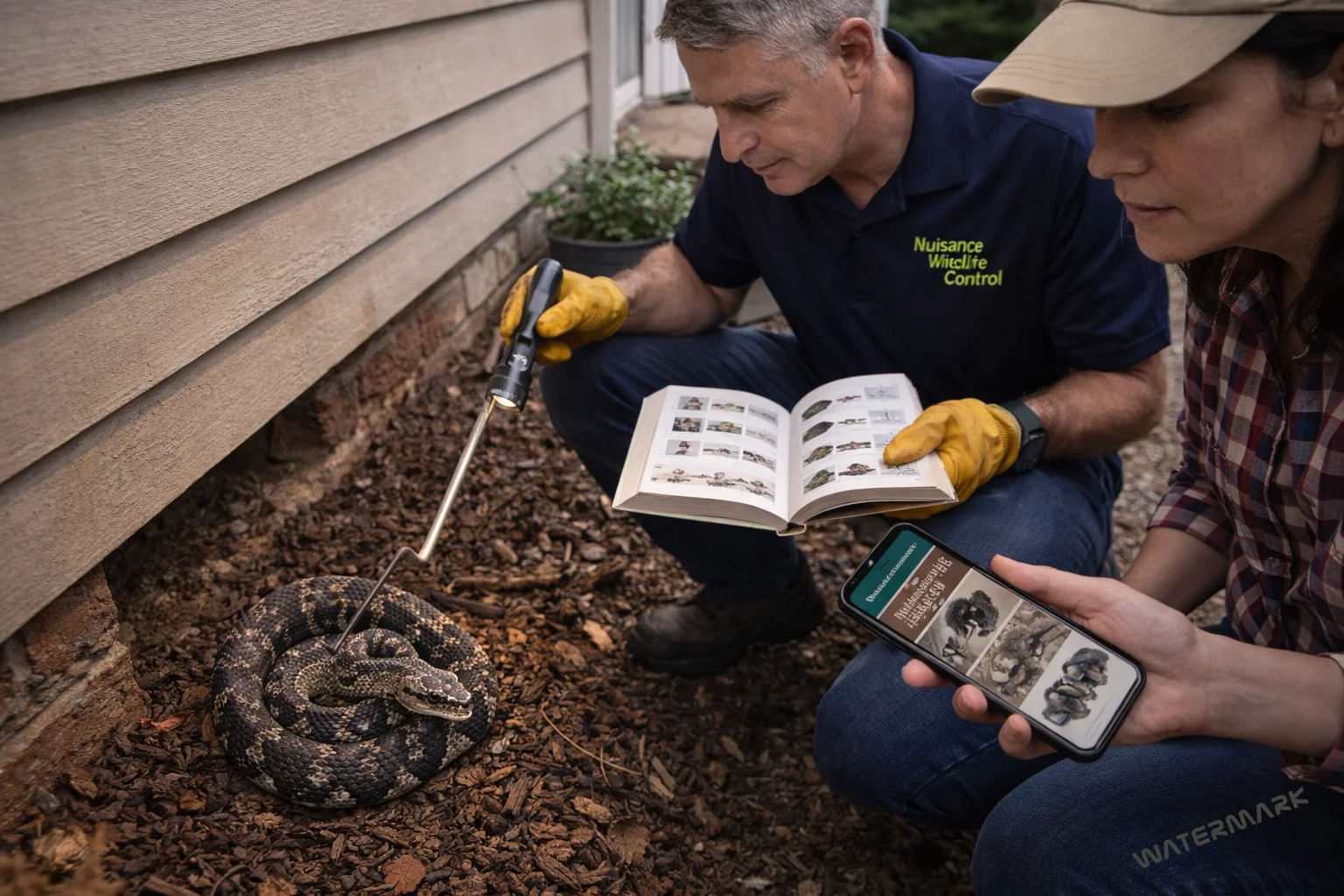
- Positive species identification before removal
- Safe handling of venomous and non-venomous snakes
- Removal from boathouses, decks, garages, and crawlspaces
- Yard-prevention recommendations (cover, harborage, prey reduction)
How the job runs
- Inspection. We walk the property — roofline, soffits, ridge vents, foundation, crawlspace — and identify entry points and animal sign.
- Removal. Live trapping, one-way exclusion devices, or hand-removal — whatever the species and situation call for.
- Sealing. Heavy-gauge wire mesh, metal flashing, or replacement materials so the entry stays closed for years, not weeks.
- Cleanup. Droppings, nesting material, and contaminated insulation handled with the right gear and disposal.
- Follow-up. We come back to confirm the exclusion held and address anything missed.
Why call us, not a generic pest company
Most pest companies set bait stations and walk away. Wildlife is different — it requires understanding animal behavior, building construction, and federal/state regulations on protected species. After forty years, we know which entry points the next mother will find before she finds it.
What you should know about snake removal
Biology & Behavior
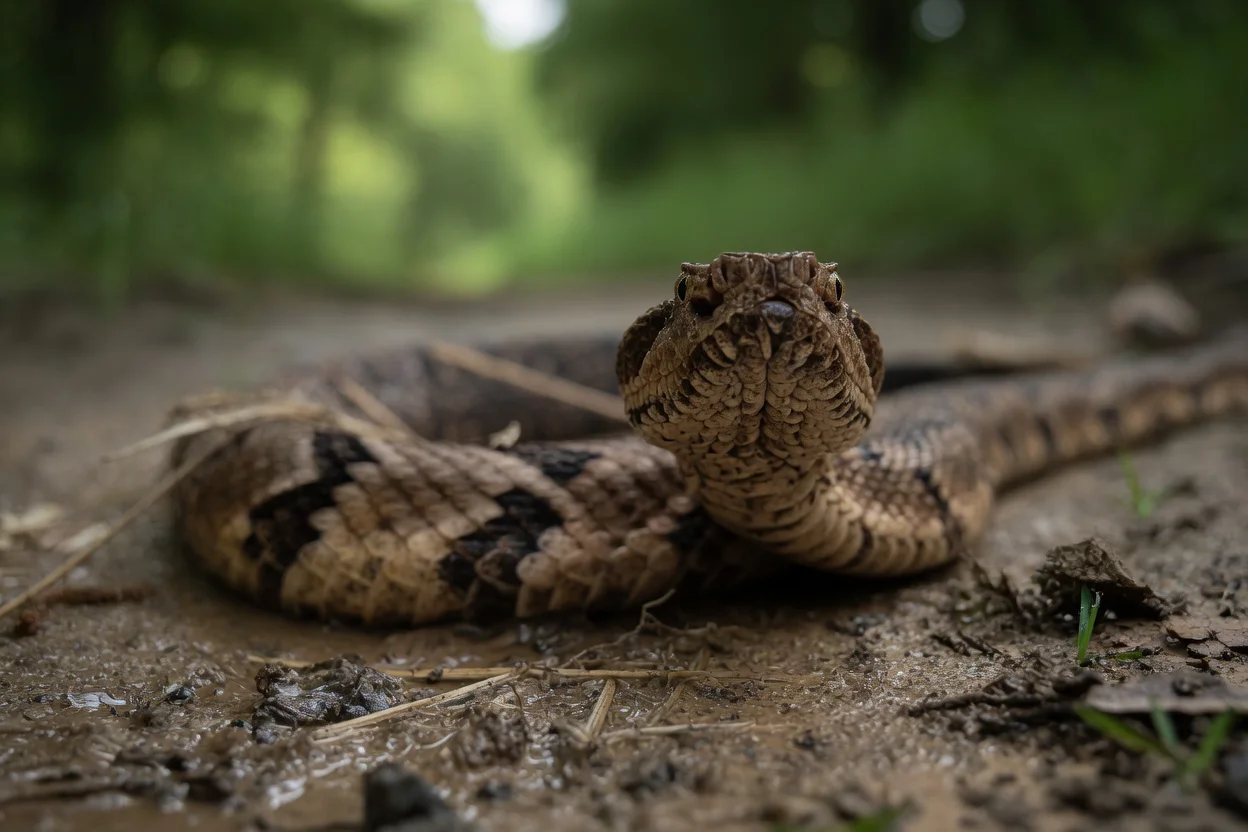
North Alabama hosts six venomous species (copperhead, cottonmouth, timber rattlesnake, pigmy rattlesnake, eastern diamondback, coral) but the vast majority of yard encounters are non-venomous rat snakes, king snakes, and racers. Snakes follow rodents and amphibians; they do not seek out humans.
Seasonal Pattern
Activity rises April through October; peak yard encounters occur May–September. Cooler nights and warmer days drive snakes onto patios and driveways to thermoregulate.
Alabama & Federal Regulations
Native non-venomous snakes are protected from wanton killing under Alabama Code; venomous snakes posing immediate risk are exempt. We work within state wildlife regulations and prefer relocation where appropriate.
See our full guide to Alabama wildlife removal regulations for the legal framework that governs this work.
Disease & Safety Risks
Direct disease risk is low; the primary risk is envenomation from misidentified venomous species. Never attempt to kill a snake — most bites occur during attempted handling or killing.
When contamination is involved, see our attic restoration process — that's how we leave the space safe to live with.
Materials We Actually Use
Snake hooks, professional-grade tongs, ventilated transport containers, hardware cloth for crawlspace and shed exclusion, recommendations for harborage removal (woodpiles, landscape rock, dense ground cover).
Curious why we use what we use? Our licensing & credentials page explains the NWCOA standards we work to.
Snake Removal by City
We run snake removal jobs across North Alabama. The towns below see this service most often — pick your nearest for local context.
Most-called snake removal cities:
Also covering:
Huntsville, AL→
Madison, AL→
Arab, AL→
Cullman, AL→
Albertville, AL→
Boaz, AL→
Athens, AL→
Hartselle, AL→
Hanceville, AL→
Owens Cross Roads, AL→
Gurley, AL→
New Hope, AL→
Recent reviews on Snake Removal work
★★★★★
"Awesome company. They called and made an appointment and were right on time. They looked at my mole and armadillo problem, discussed what needed done, gave me a quote and did a great job."
Ken Westfall
★★★★★
"EXCELLENT COMPANY! Very honest, didn't try to upsell us on things we didn't need, and gave us great tips on how to shore up our home to avoid more critters. HIGHLY recommend and would definitely use again!"
Julianna Denes
★★★★★
"They did a wonderful job! Quickly determined the problem (squirrels building nests in our attic) and worked hard to fix it. Came a few different times to locate every spot they were gaining entry and sealed it up. Also ensured every inch o…"
Danaye Shiplett