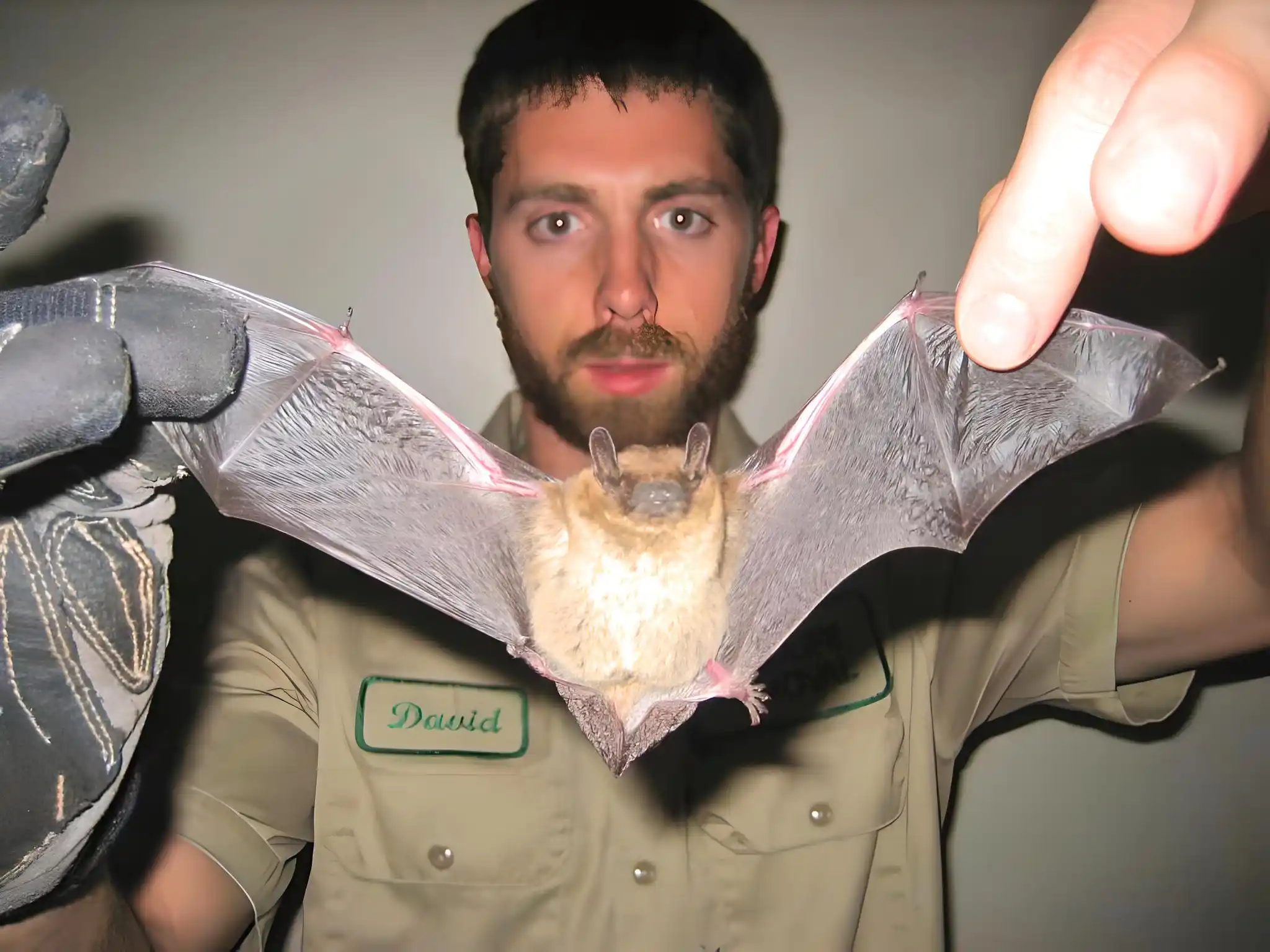
Bats are commonly active this month
Watch for chirping at dusk, scratching above bedrooms, and dark stains at roof junctions. Common pattern: guano.
Watch for chirping at dusk, scratching above bedrooms, and dark stains at roof junctions.

Old Decatur and Albany historic districts have housed bat colonies for decades — often quietly, in chimneys and behind original soffit returns. We do the regulated, legal exclusion work that protects the colony and the homeowner.
Decatur's older masonry is bat-friendly. The original chimney flashing, dormer-to-roof transitions, and brick-rake details on Albany and Old Decatur homes give bats entry points that have, in many cases, been used for generations. Federal and Alabama law govern every step of removal: no killing, no trapping, no exclusion during the May–July maternity season. We schedule Decatur bat work for the post-maternity window, install one-way valves, and seal with materials that respect the historic character of the home while ending colony access.
Chimney flashing and dormer transitions are the two most common Decatur bat entries we see. On Albany homes, the brick-rake joint at the gable is a frequent secondary entry. We never seal during maternity.
Where we work: Morgan County · ZIPs 35601, 35603 · along I-65, I-565, US-31, US-72 Alt
Working a job in Decatur is one piece of a bigger picture — bats behave the same way across North Alabama, even when entry points differ town to town. For the biology, damage patterns, exclusion approach, and where else we work this species, see our full attic bat removal in North Alabama guide.
Most North Alabama colonies are big brown bats or evening bats. Colonies enter through gaps as small as 3/8 inch around ridge caps, gable vents, soffit returns, and chimney flashing.
Maternity season runs roughly May through July; full exclusion is typically performed outside that window. We can stabilize and prep during maternity season, then complete exclusion after.
Bats are protected by federal and Alabama state law. Removal must use exclusion (one-way valves), never trapping or killing, and cannot occur during the summer maternity season when flightless pups are present.
Histoplasmosis (a respiratory fungus from old guano) and rare rabies exposure. Direct skin contact with bats or guano should always involve professional PPE.
Stainless one-way exclusion valves, copper mesh, hardware cloth, metal flashing, polyurethane sealants. We avoid foam-only seals — bats and rodents chew through them.
"Squirrels had infiltrated an insulation area near my attic on the second floor and were causing damage to my home. After calling one afternoon, the next morning bona fide wildlife expert Jim Sweezy came out to give me options and a free es…"
"This company showed up when they said they would. Which was more than I can say, of a different place. They got to work quickly, with a respectful crew, and they cleaned up after their job. I am Impressed with them and I would recommend th…"
We handle squirrels, raccoons, bats, skunks, snakes, birds, moles, armadillos, and other nuisance wildlife common to Alabama homes.
Yes. All removal methods are humane and designed to safely evict animals without unnecessary harm whenever possible.
Yes. We locate and seal entry points to prevent animals from returning after removal.
Absolutely. Attics and crawlspaces are common nesting areas, and we specialize in safely removing wildlife from these spaces.
Avoid disturbing the area and call us right away. Scratching sounds often indicate squirrels, raccoons, or bats.
Yes. We offer cleanup and sanitation services to remove droppings, nesting materials, and contaminated insulation.
Watch for chirping at dusk, scratching above bedrooms, and dark stains at roof junctions. Common pattern: guano.
Watch for chirping at dusk, scratching above bedrooms, and dark stains at roof junctions.
Squirrels, rats, mice, and raccoons all begin shelter-seeking for winter in September. This is the highest-leverage inspection month of the year — sealing entry points before October prevents the rest of the season's ca…
Watch for scratching in walls at dawn, scampering above the ceiling, and chewed soffit corners.
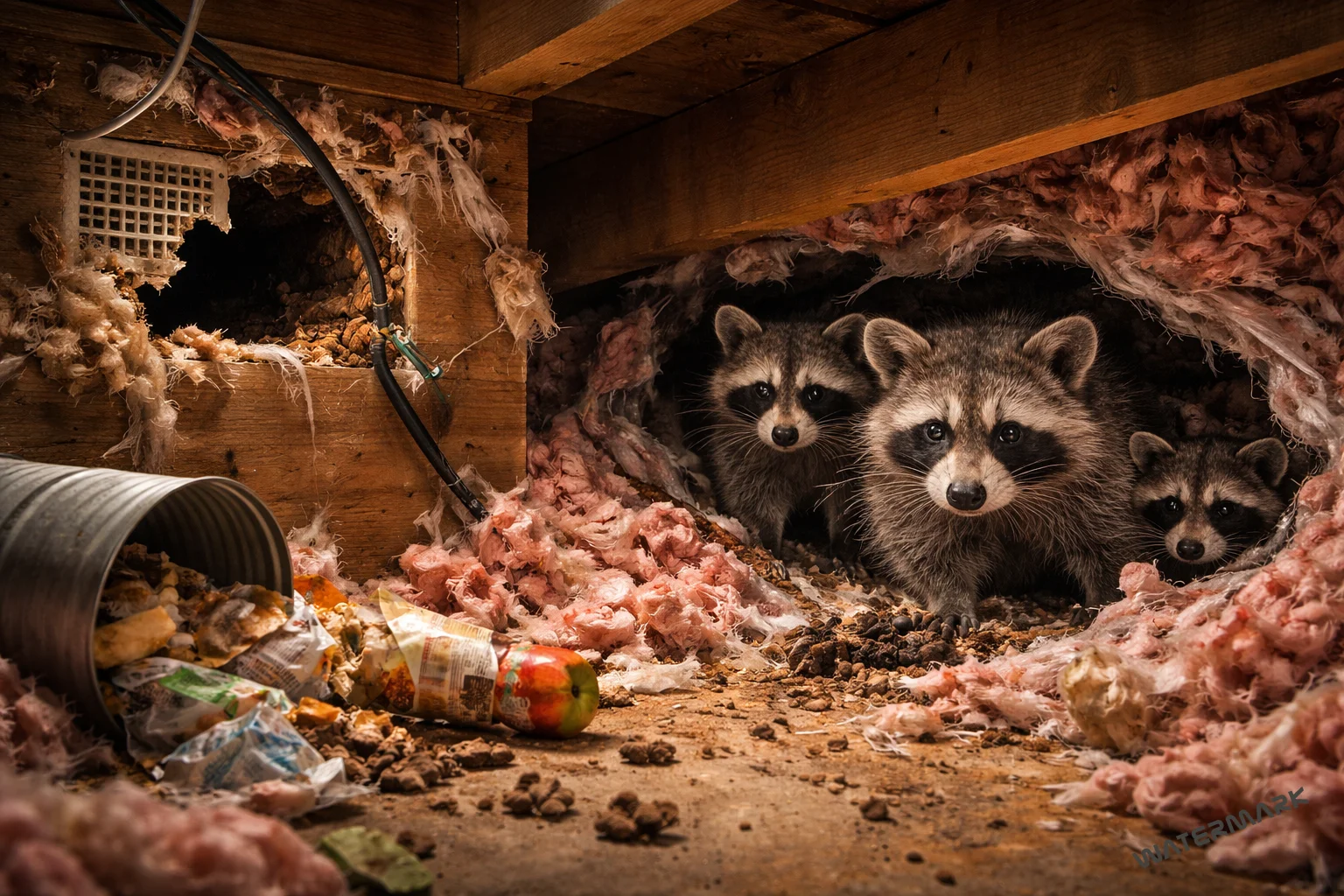
Learn to identify the telltale signs of raccoon activity in your attic, from nocturnal sounds to physical damage, and understand …
Raccoons in the attic make heavy footsteps, low chattering, and growls — much louder than squirrels or rats. Here's how to tell w…
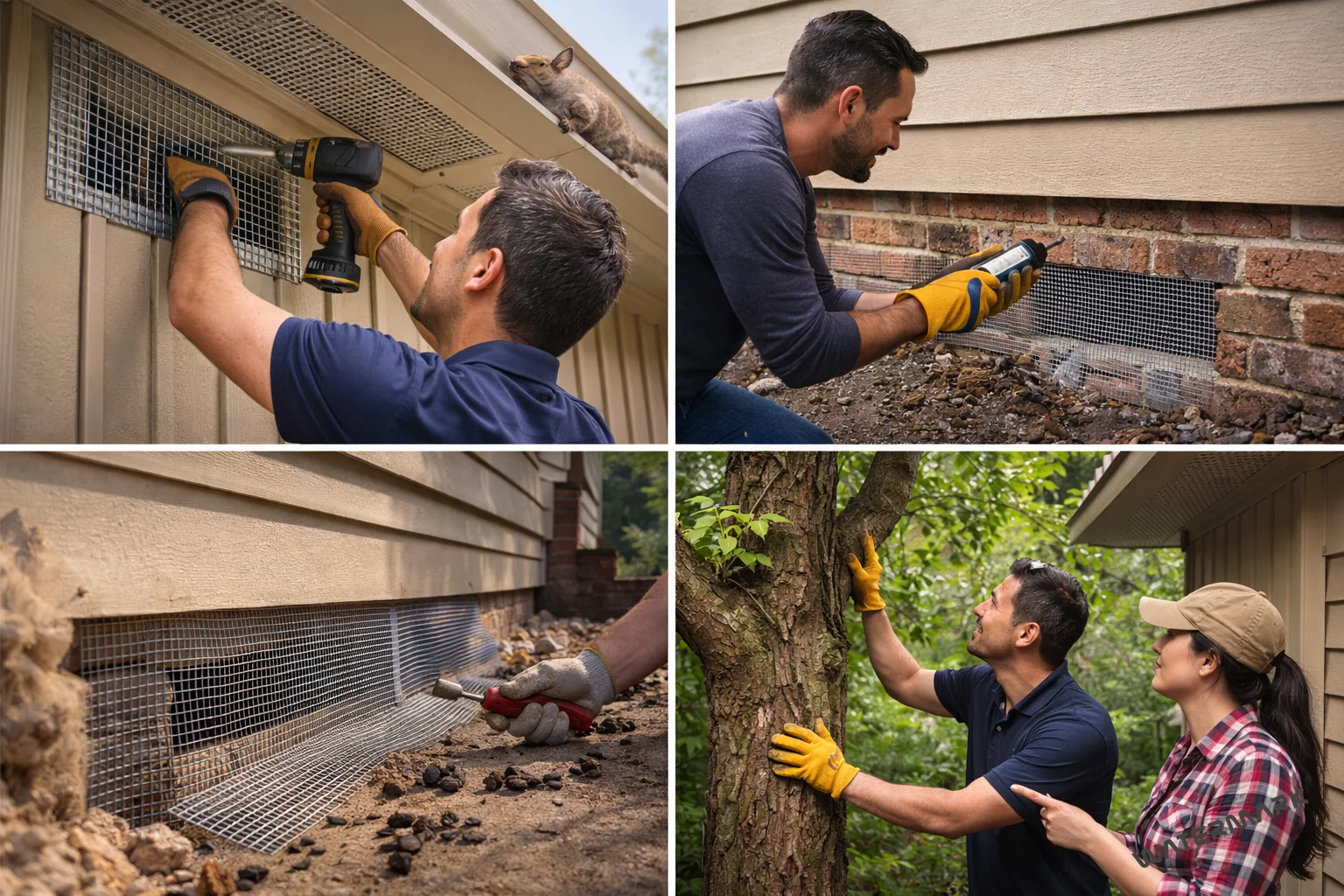
Discover effective strategies to keep squirrels out of your home, including property maintenance, entry point sealing, and why pr…
Most Decatur jobs scheduled within 24–48 hours.