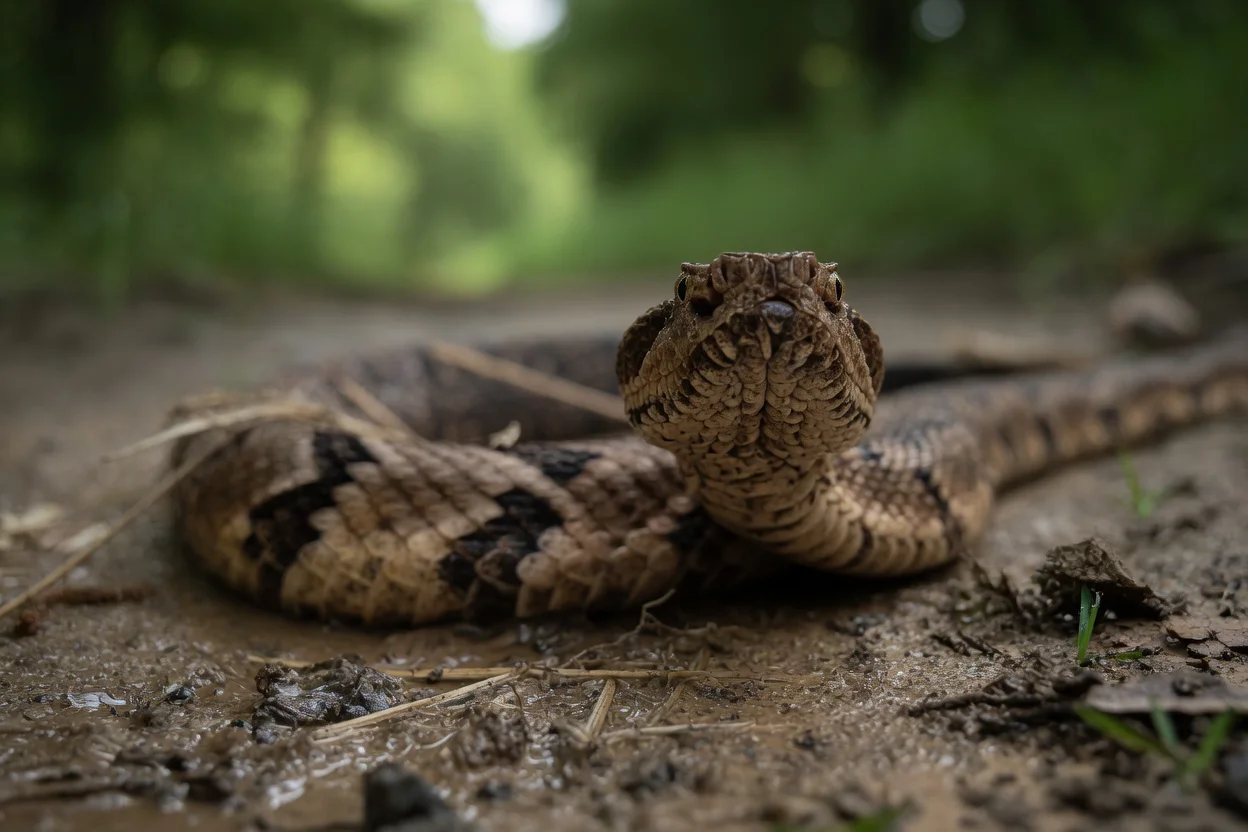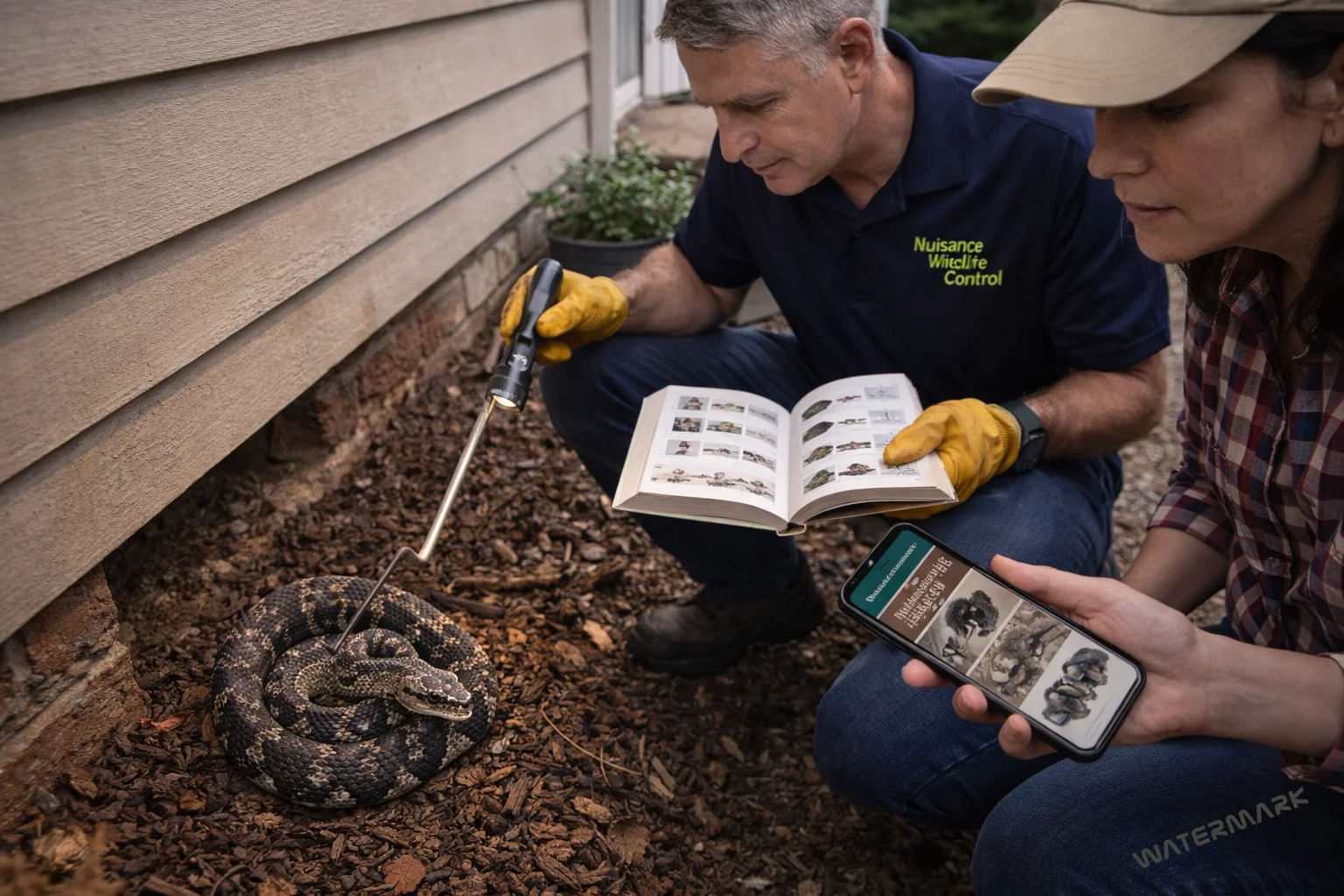
Two venomous snakes in North Alabama cause the most homeowner anxiety: the copperhead and the cottonmouth (also called water moccasin). They are sometimes confused with each other and frequently confused with harmless rat snakes or water snakes. Knowing the difference matters — the response is different, and the risk profile is different.
Where each species shows up
Copperheads are the snake you are most likely to encounter on a typical North Alabama property. They favor leaf litter, woodpile edges, mulched landscape beds, and the seam where a yard meets the woods. Wooded subdivisions in Huntsville, Madison, and the wooded edges of Decatur produce most of our copperhead calls.
Cottonmouths are water snakes. We see them along the river, at Wheeler Lake, around farm ponds, and in slow creeks and drainage channels. If a snake is in or near standing water — and it stands its ground when approached — cottonmouth is on the list. The vast majority of "cottonmouths" homeowners report in dry yards are actually non-venomous water snakes or rat snakes.
Field identification points
Adult copperheads have an hourglass pattern — dark crossbands that pinch in toward the spine, wide on the sides. The head is coppery to tan. Pupils are vertical (cat-like).
Cottonmouths are heavier-bodied, darker overall, often nearly black as adults. The "cotton mouth" name comes from the white interior of the mouth they display when threatened. Juveniles can look superficially copperhead-ish, which is part of why misidentification is common.
What to do when you find one
Step back, give the snake space, and call. We handle venomous snake removal across the region. Do not attempt to corner, scoop, or kill a venomous snake — most snake bites happen during attempted handling, not during accidental encounter. For the broader picture on what species are active and when, see our venomous snake guide for North Alabama.
If the encounter is near the water — boat ramp, pond edge, dock — that is consistent with cottonmouth habitat. We run a steady stream of those calls in summer; see snake work around Guntersville and the lake for context.
Where the misidentifications come from
Rat snakes (black or gray) are the most-misidentified snake in North Alabama. They are non-venomous, they climb, and they will rattle their tail in dry leaves — which sounds alarmingly like a rattlesnake. Northern water snakes are also routinely called "cottonmouths" because they are aquatic and defensive. The defensive flattening of the head is what fools most observers.