About snake removal in Decatur
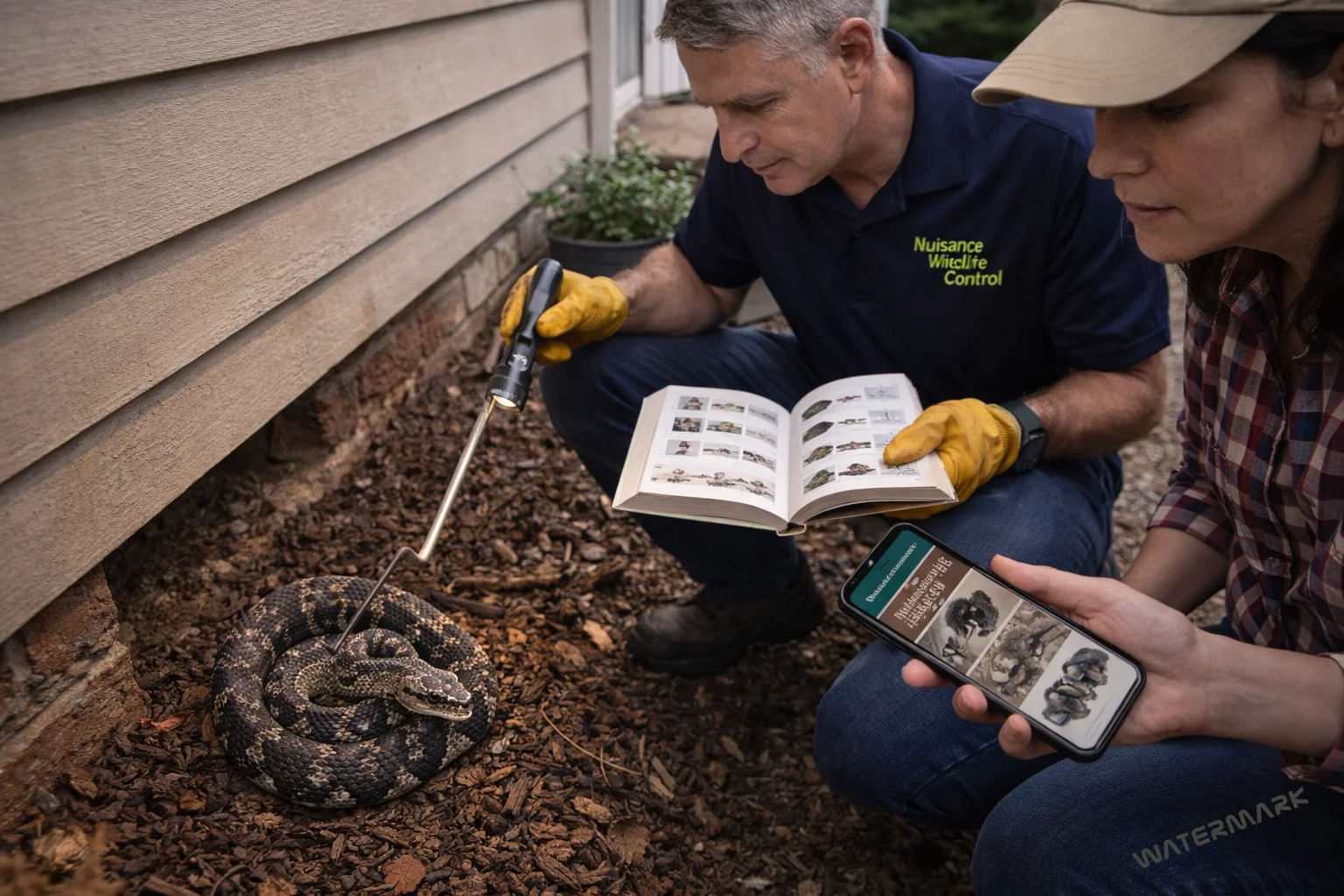
Decatur snake calls follow predictable geography. Riverfront properties along the Tennessee River bring boathouse and dock encounters — usually rat snakes after frogs, occasionally a cottonmouth. Older Albany and Old Decatur homes with landscape rock and woodpiles harbor copperheads more than people realize. Our work starts with positive species identification: we will not remove and relocate a venomous snake on misidentification, and we will not kill a non-venomous one needlessly. Yard prevention recommendations — harborage reduction, woodpile relocation, prey control — follow every job.
Local context for Decatur
Tennessee River shoreline encounters cluster from May through September. Albany historic homes with mature landscape rock see a steadier year-round profile, with a copperhead peak in late summer.
Where we work: Morgan County · ZIPs 35601, 35603 · along I-65, I-565, US-31, US-72 Alt
What's included
- Positive species identification before removal
- Safe handling of venomous and non-venomous snakes
- Removal from boathouses, decks, garages, and crawlspaces
- Yard-prevention recommendations (cover, harborage, prey reduction)
Working a job in Decatur is one piece of a bigger picture — snakes behave the same way across North Alabama, even when entry points differ town to town. For the biology, damage patterns, exclusion approach, and where else we work this species, see our full snake-proofing your yard in North Alabama guide.
What you should know about snake removal
Biology & Behavior
North Alabama hosts six venomous species (copperhead, cottonmouth, timber rattlesnake, pigmy rattlesnake, eastern diamondback, coral) but the vast majority of yard encounters are non-venomous rat snakes, king snakes, and racers. Snakes follow rodents and amphibians; they do not seek out humans.
When this happens in Decatur
Activity rises April through October; peak yard encounters occur May–September. Cooler nights and warmer days drive snakes onto patios and driveways to thermoregulate.
Alabama & Federal Regulations
Native non-venomous snakes are protected from wanton killing under Alabama Code; venomous snakes posing immediate risk are exempt. We work within state wildlife regulations and prefer relocation where appropriate.
Disease & Safety Risks
Direct disease risk is low; the primary risk is envenomation from misidentified venomous species. Never attempt to kill a snake — most bites occur during attempted handling or killing.
Materials We Actually Use
Snake hooks, professional-grade tongs, ventilated transport containers, hardware cloth for crawlspace and shed exclusion, recommendations for harborage removal (woodpiles, landscape rock, dense ground cover).
Recent customer feedback
★★★★★
"This company showed up when they said they would. Which was more than I can say, of a different place. They got to work quickly, with a respectful crew, and they cleaned up after their job. I am Impressed with them and I would recommend th…"
Suzanne "Suzie" Carnley
★★★★★
"Jim went above and beyond for my raccoon problem! He was prompt, easy to talk to, and didn’t charge an arm and a leg. He fixed the places where the raccoons were getting into my garage on top of correcting the animal problem. I can’t say E…"
Emily Sundt