About raccoon removal in Decatur
Decatur raccoon work splits cleanly between two property types. Tennessee River-adjacent homes draw raccoons that explore boathouses, dock storage, and foundation vents at the river-facing side of crawlspaces. Older Albany and Old Decatur historic homes are vulnerable through original chimney flashing, dormer transitions, and aged soffit returns. We trap, exclude, and seal — and on river-corridor properties we also address the food-source side (covered trash, secure feed storage at lakefront properties).
Local context for Decatur
Decatur raccoon calls peak February through May, matching the maternal denning cycle. River-corridor homes get a second smaller spike in October when raccoons scout winter den sites. Foundation vent failures at the south or river-facing side of crawlspaces are our most common Decatur entry point.
Where we work: Morgan County · ZIPs 35601, 35603 · along I-65, I-565, US-31, US-72 Alt
What's included
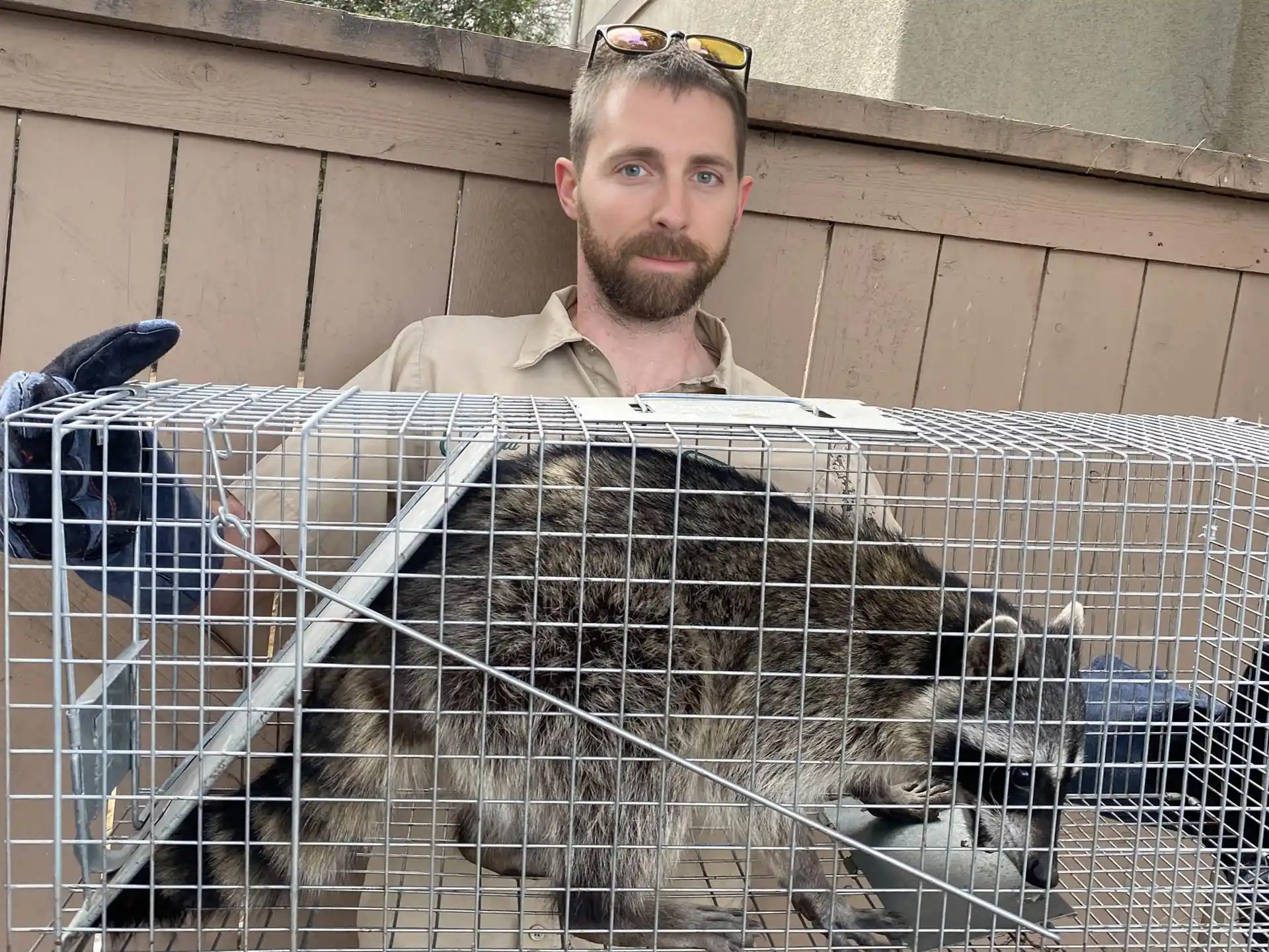
- Live trap and humane removal
- Mother-with-young handling
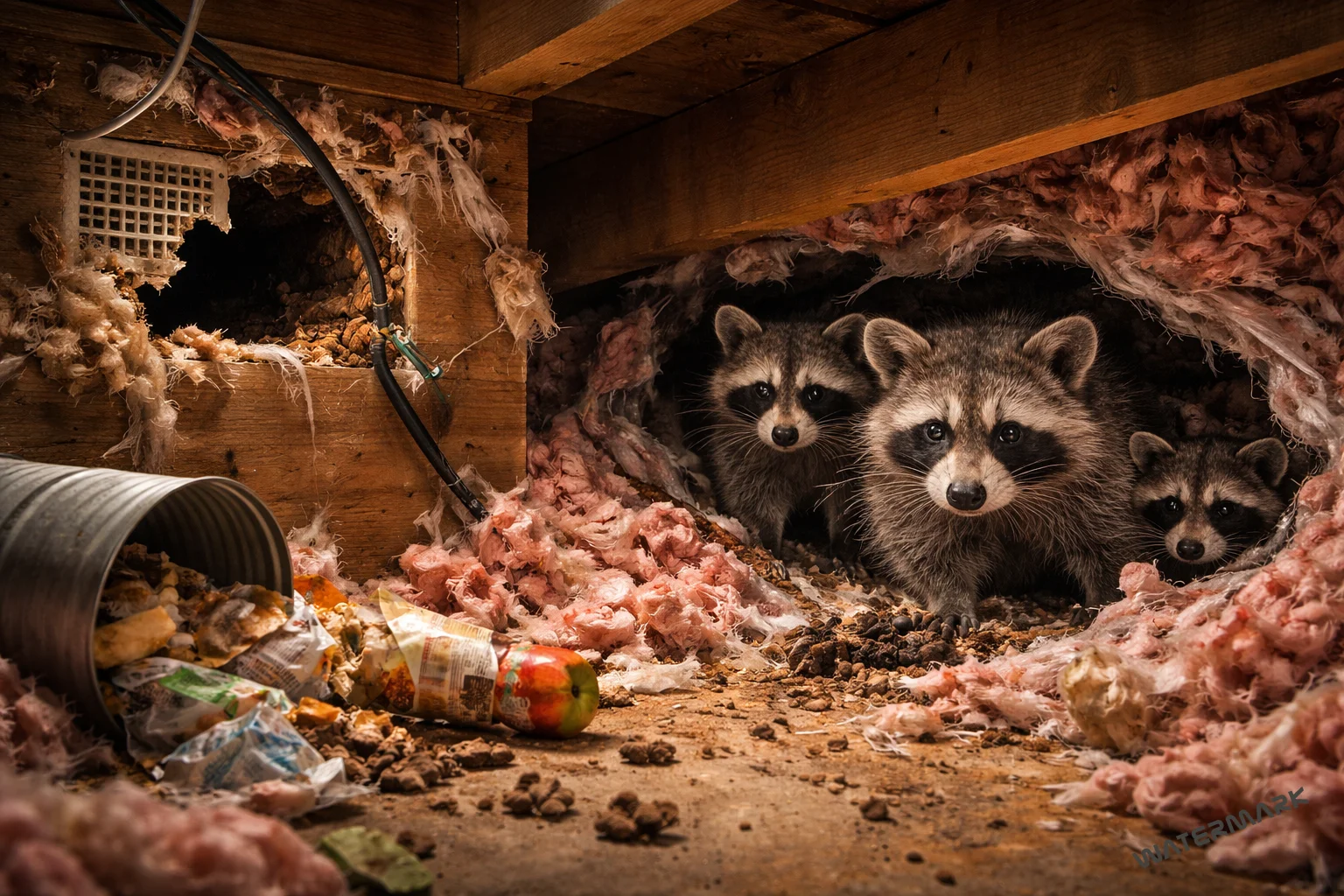
- Latrine cleanup and insulation replacement
- Reinforced entry-point repairs
Working a job in Decatur is one piece of a bigger picture — raccoons behave the same way across North Alabama, even when entry points differ town to town. For the biology, damage patterns, exclusion approach, and where else we work this species, see our full attic latrine cleanup in North Alabama guide.
What you should know about raccoon removal
Biology & Behavior
Adult raccoons weigh 12–25 lbs, climb roofs easily, and target attics for maternal denning. They will tear soffit vents, lift shingles, and pry roof returns.
When this happens in Decatur
Peak attic activity is February through May (denning and kit-rearing). Late-summer dispersal brings juveniles into garages and crawlspaces.
Alabama & Federal Regulations
Raccoons are an unprotected nuisance species in Alabama but must be handled humanely; live trapping and on-site euthanasia options follow state wildlife code.
Disease & Safety Risks
Raccoon roundworm (Baylisascaris procyonis), leptospirosis, and rabies. Attic latrines require professional sanitation — spores survive years.
Materials We Actually Use
Live traps, heavy-gauge hardware cloth, steel flashing, stainless screws, replacement soffit and ridge-vent material, attic decontamination supplies.
Recent customer feedback
★★★★★
"This company showed up when they said they would. Which was more than I can say, of a different place. They got to work quickly, with a respectful crew, and they cleaned up after their job. I am Impressed with them and I would recommend th…"
Suzanne "Suzie" Carnley
★★★★★
"They did a wonderful job! Quickly determined the problem (squirrels building nests in our attic) and worked hard to fix it. Came a few different times to locate every spot they were gaining entry and sealed it up. Also ensured every inch o…"
Danaye Shiplett