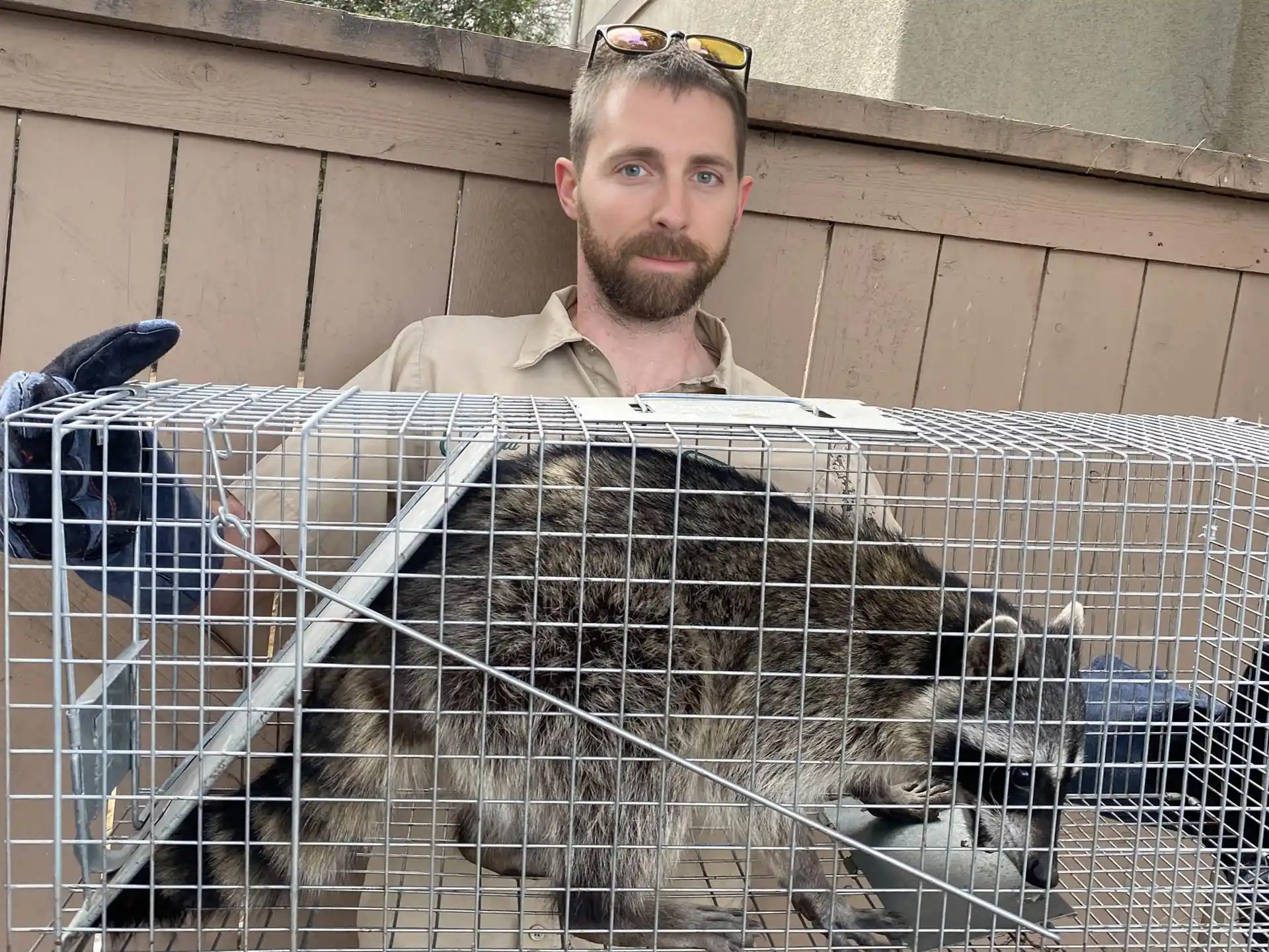
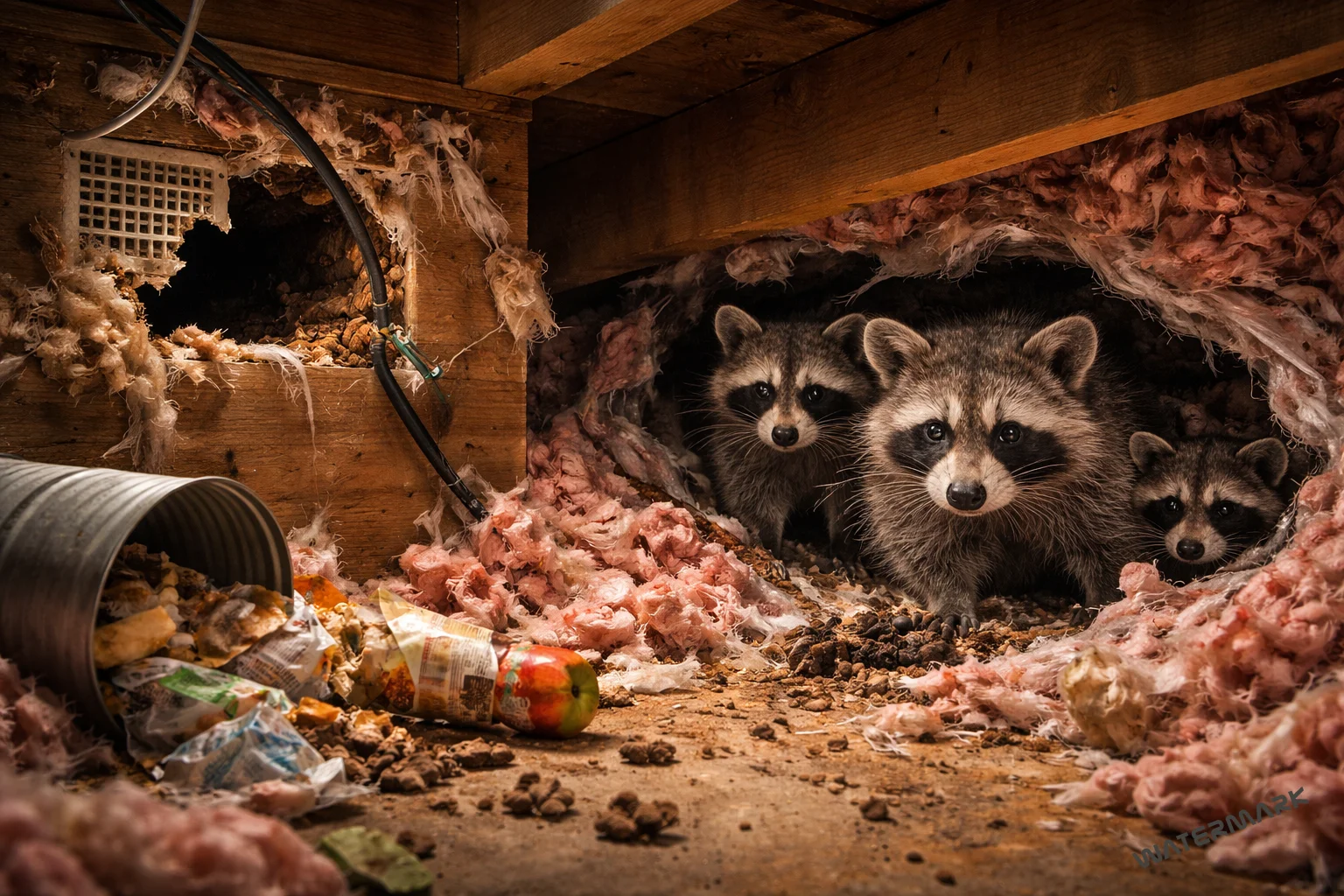
Raccoons in or around your home are not a low-stakes problem. They are powerful, intelligent, and they carry diseases — some of which persist in the environment long after the animal is gone. Here is the honest assessment for Alabama homeowners.
The short answer
Raccoons rarely attack humans unprovoked. The realistic risks come from indirect exposure: the diseases they shed into their environment, the parasites in their waste, and the structural damage they cause. Bite risk is low if you avoid handling them; environmental risk is significant if there's been a raccoon presence in or around your home.
Disease 1: Rabies
Raccoons are the most common rabies carrier in the southeastern U.S. The CDC and Alabama Department of Public Health track raccoon-strain rabies as an ongoing concern. Most raccoons are not rabid, but any raccoon showing unusual behavior must be treated as potentially rabid:
- Active during the day (raccoons are nocturnal — daytime activity is a red flag).
- Disoriented, stumbling, or partially paralyzed.
- Unusually aggressive or unusually unafraid of humans.
- Foaming at the mouth or excessive salivation.
If you observe these signs, do not approach. Call us or Alabama animal control immediately.
Disease 2: Raccoon roundworm (Baylisascaris procyonis)
This is the disease that worries professionals the most. Raccoons excrete Baylisascaris eggs in their feces — and the eggs persist in the environment for years. They are essentially impossible to fully eradicate without proper attic decontamination. Human infection is rare but devastating: the larvae migrate through the body and can cause severe neurological damage, blindness, or death.
Children are at highest risk because they're more likely to put contaminated soil or surfaces in their mouth. A raccoon latrine in an attic, garage, or yard is not something to clean with household products. It requires PPE-mandatory professional work. See our attic restoration process.
Disease 3: Leptospirosis
Bacterial infection transmitted through raccoon urine. Risk is highest in standing water and damp soil contaminated by raccoon urine. Symptoms in humans include fever, muscle pain, jaundice, and kidney damage. Dogs are also at risk and there is a leptospirosis vaccine for dogs that is worth discussing with your vet if you have raccoon activity nearby.
Disease 4: Other concerns
- Giardia and other protozoal infections from waste contamination.
- Salmonella and similar bacteria.
- Fleas, ticks, and mites that raccoons carry into the home environment.
Structural risks
Raccoons cause physical damage that creates additional safety problems:
- Chewed wiring (fire risk).
- Compressed and contaminated insulation (reduced R-value plus health hazard).
- Torn soffits and lifted shingles (water intrusion risk).
- Damaged ductwork (HVAC contamination, energy loss).
What about pets?
Dogs that encounter raccoons can be bitten, sustain serious injuries, or contract leptospirosis. Cats are at risk from rabies-strain exposure. Keeping pets indoors at dusk and dawn — when raccoons are most active — is straightforward harm reduction.
What you should do
- Do not handle a raccoon under any circumstances. Live or dead.
- If a raccoon has gotten inside your home (basement, garage, attic), do not try to capture it. Call professional removal.
- If you have raccoon waste in an attic, do not clean it without PPE. The Baylisascaris risk is real.
- If a person or pet has been bitten or scratched, see medical care immediately and report the incident.
- For active raccoon presence — schedule a professional inspection. We identify entry points, remove animals (including mothers with kits), seal entries, and do full attic decontamination where needed.
Raccoons aren't villains — they're just successful generalist mammals doing what they evolved to do. The right response is competent professional removal, not panic and not DIY. Call us at 256-636-1168.