Alabama has six native venomous snakes statewide. In the northern third of the state — Huntsville south to Cullman, Decatur east to Guntersville — three species are the realistic concern for homeowners. The other three either do not reach this latitude or are vanishingly rare in suburban settings.
The three you might actually meet
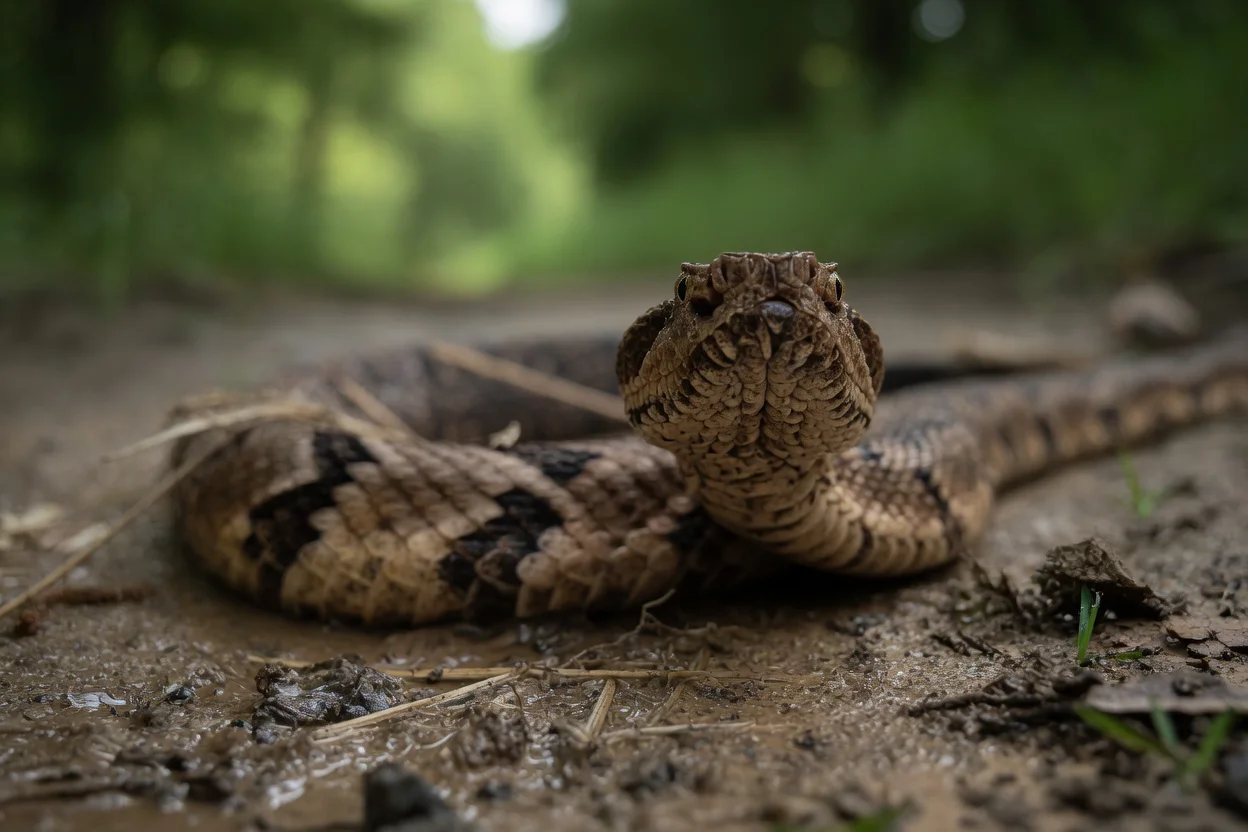
Copperhead. By far the most-encountered venomous snake on residential property. Wooded yards, mulch beds, woodpiles, garages, and storage sheds. Active from April through October. Bites are usually defensive — accidental contact during yard work or stepping over a log.
Cottonmouth (water moccasin). Tied to water — rivers, ponds, lakes, slow creeks. Aggressive defensive display but not aggressive in the territorial sense. Lake homes, dock walks, and fishing access points are the typical encounter setting.
Timber rattlesnake. Less common but present in wooded mountain habitat — Monte Sano, Bankhead, the wooded ridges. Generally avoids residential settings. Sightings are notable but not routine.
The three you almost certainly will not
Pygmy rattlesnake (rare and small-bodied), eastern diamondback rattlesnake (range mostly south of us), and coral snake (range mostly south of us). We do not log calls on any of these in our service area.
What gets confused with venomous species
Rat snakes (black, gray) — the most common large snake in North Alabama, totally non-venomous, often mistaken for rattlesnakes because they rattle their tail in leaves. Northern water snakes — non-venomous but defensive and aquatic, routinely called cottonmouths. Hognose snakes — dramatic defensive display, totally non-venomous. Mole kingsnakes — beneficial constrictor that actually preys on copperheads.
What an inspection actually finds
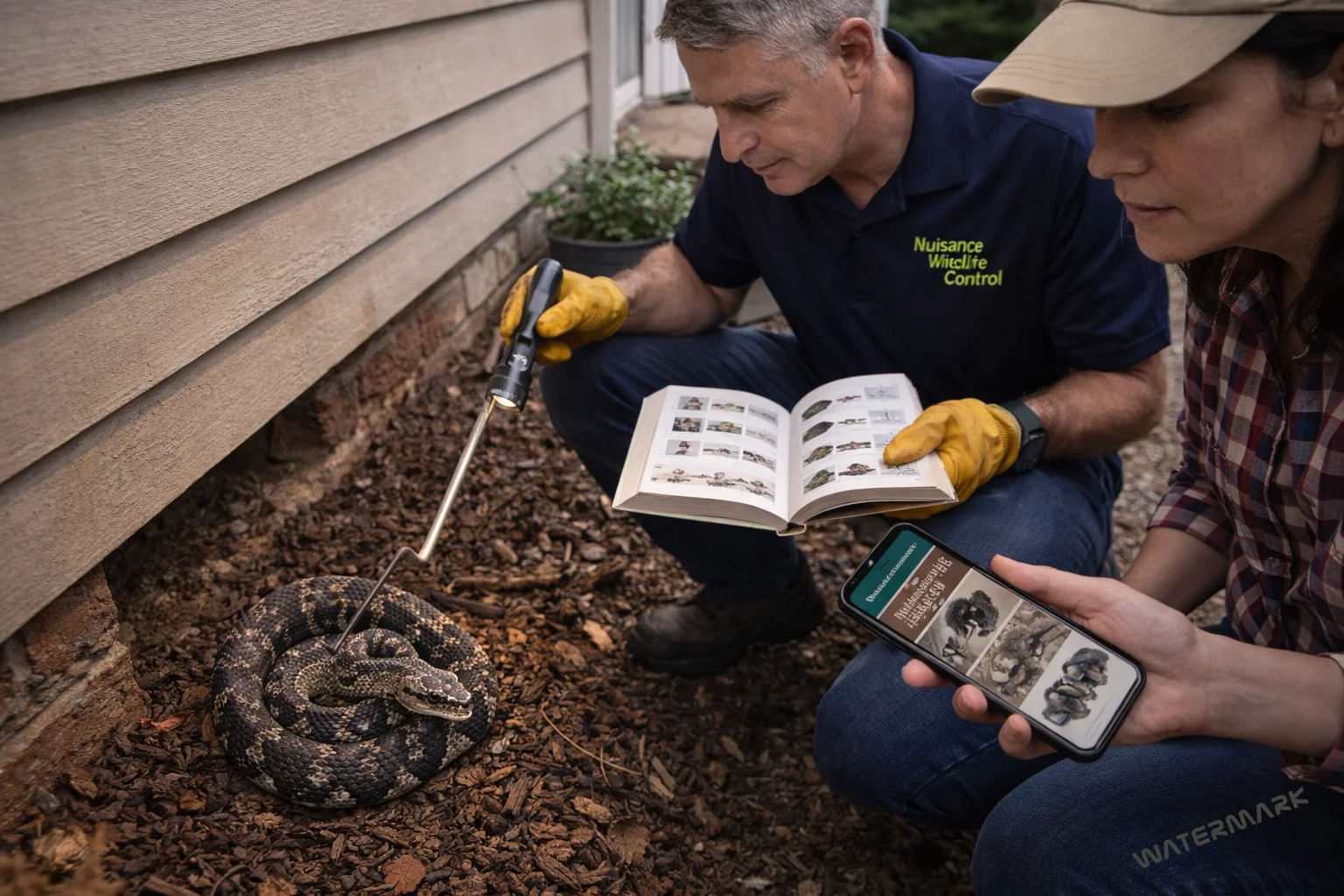
Across hundreds of "I found a snake" calls each year, the breakdown sits roughly at: 70% non-venomous, 25% copperhead, 4% cottonmouth, 1% other. The non-venomous calls still need to be resolved — homeowners want them gone, and the entry/harborage causing the encounter is the same. For the full species reference, see our full snake species reference for North Alabama.
The pattern is geographic. We see Decatur snake calls skew heavily wooded-yard copperhead; lake-adjacent towns skew water snake and cottonmouth.
If you are bitten
Call 911 or get to an emergency department. Do not apply ice, do not try to suck venom, do not apply a tourniquet, and do not try to catch the snake. A clear photo from a safe distance is far more useful to the hospital than the snake itself.