You found small dark droppings in the attic, garage, or along a wall. You need to know what left them — because the answer determines whether you're looking at a simple pest issue or a federally regulated bat problem with serious health implications.
The short answer
Bat droppings (guano) crumble when touched and contain shiny, undigested insect parts. They are usually found in piles directly below where bats roost. Mouse droppings are firm, tapered at the ends, and scattered along travel paths. Rat droppings are larger versions of mouse droppings.
Size comparison
- Bat guano: 1/4 to 1/2 inch long, similar to a grain of rice, often pellet-shaped.
- Mouse droppings: 1/8 to 1/4 inch long, pointed at one or both ends.
- Rat droppings: 1/2 to 3/4 inch long, blunt ends (Norway rat) or pointed ends (roof rat).
- Squirrel droppings: 3/8 inch, rounded ends, often lighter in color.
Texture: the single best diagnostic
Bat guano crumbles to dust between your fingers (do not do this without gloves and a mask). The bat's diet is almost entirely insects, so the droppings are essentially dried insect exoskeletons compressed into pellet shape. You'll see iridescent, shiny fragments if you look closely.
Mouse and rat droppings are firm. They don't crumble; they break with pressure but stay in one piece.
Location pattern
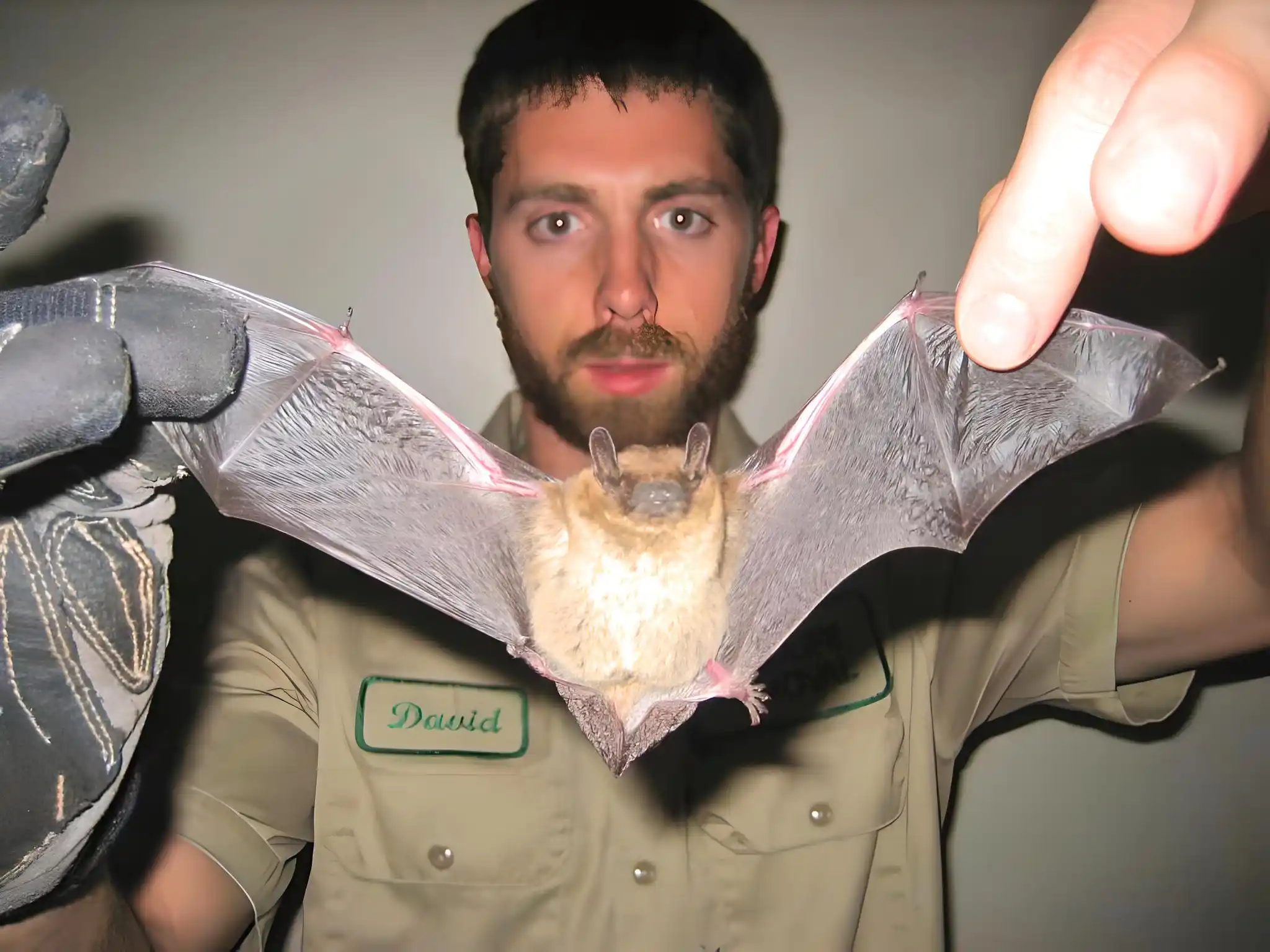
- Bats: piles directly below a roost site — typically below a ridge cap, gable vent, or soffit return. The pile builds up vertically over months or years. There may be brown staining on the wall or beam directly above (urine).
- Mice: scattered along walls, behind appliances, in drawers, and along established runways. Distribution looks random or follows wall edges.
- Rats: larger piles, often in concentrated areas where rats spend significant time (food storage, nesting).
Why this matters: health risks
Bat guano isn't just unsightly — it carries Histoplasma capsulatum, a fungus whose spores cause histoplasmosis, a respiratory disease that ranges from mild to severe (and can be life-threatening in immunocompromised people or those exposed to large quantities). The spores become airborne when old guano is disturbed.
The risk varies with guano volume and age. A small recent pile is lower risk than a multi-year accumulation. Never sweep or vacuum old bat guano — that's exactly what aerosolizes the spores.
Mouse droppings carry their own concerns (hantavirus, salmonella) but they are less specifically dangerous in the way bat guano is.
If you think it's bat guano
- Stop disturbing it. Don't sweep, vacuum, or move it.
- Look up — check the structure directly above the pile for an entry point (a gap, a vent, a chimney flue).
- Listen at dusk. Bats exit the roost about 20 minutes after sunset. Watching the suspected entry point from outside at dusk will usually confirm or rule out a colony.
- Call a professional. Bat removal is governed by federal and Alabama state law. We handle the identification, the timing (no full exclusion during May–July maternity), and the PPE-mandatory cleanup and decontamination.
If it's mice or rats
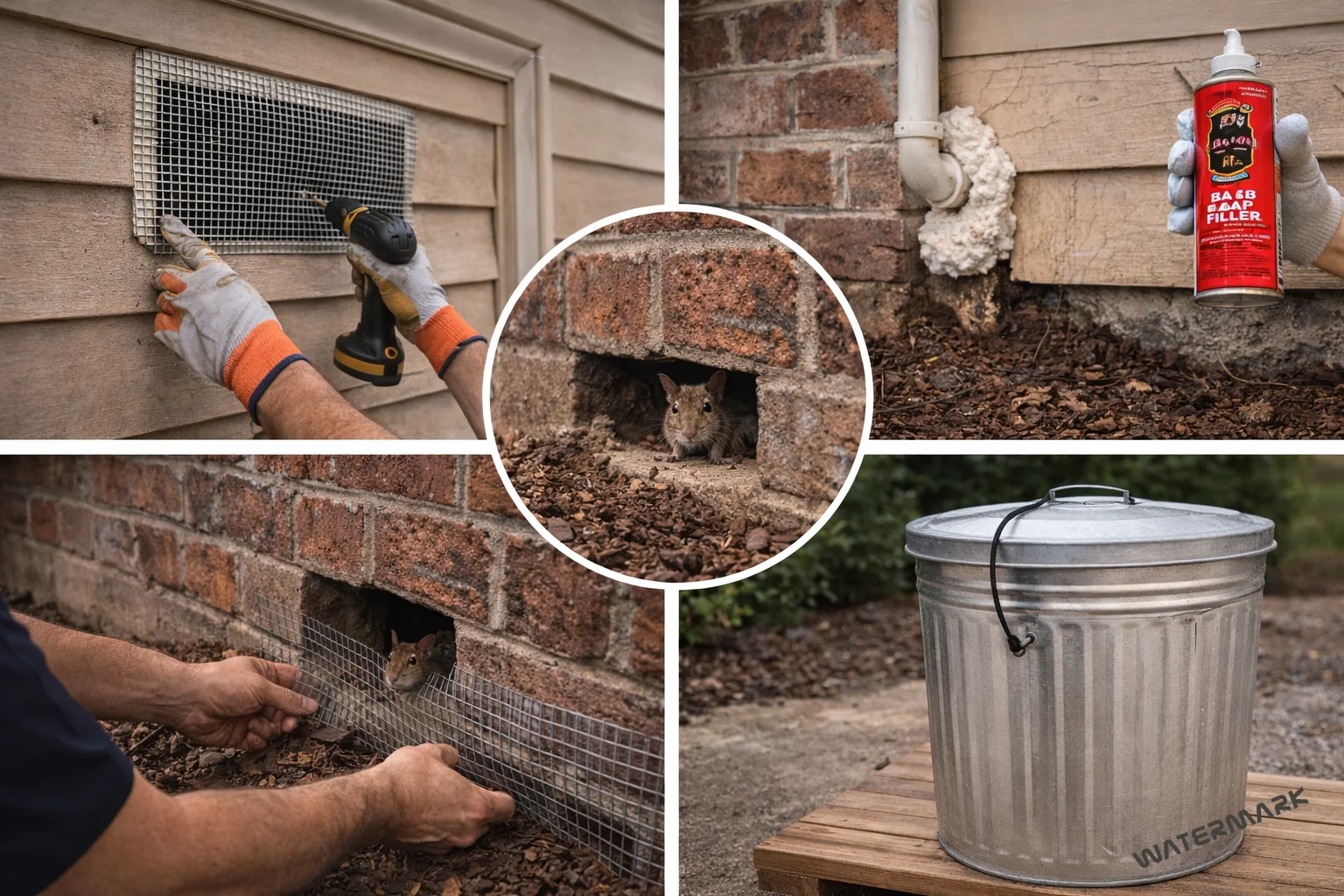
Routine rodent prevention work handles most mouse and rat situations: seal entry points (mice need 1/4 inch, rats need 1/2 inch), eliminate food sources, deploy traps. For sustained or expanding rodent activity, a professional inspection identifies entry points homeowners typically miss.
If you're not sure
Take a clear photo (with something for scale — a coin works) and call us. We can usually identify the species from a good photo without you having to handle the material yourself. Free phone consultation, no obligation.