You smell something. It wasn't there last week. Now it's everywhere when you walk into the kitchen, or it comes and goes with the furnace cycle, or it sits over one specific room. Wildlife is one of the most common causes — and the type of smell tells you what's happening.
Smell 1: sharp ammonia (urine accumulation)
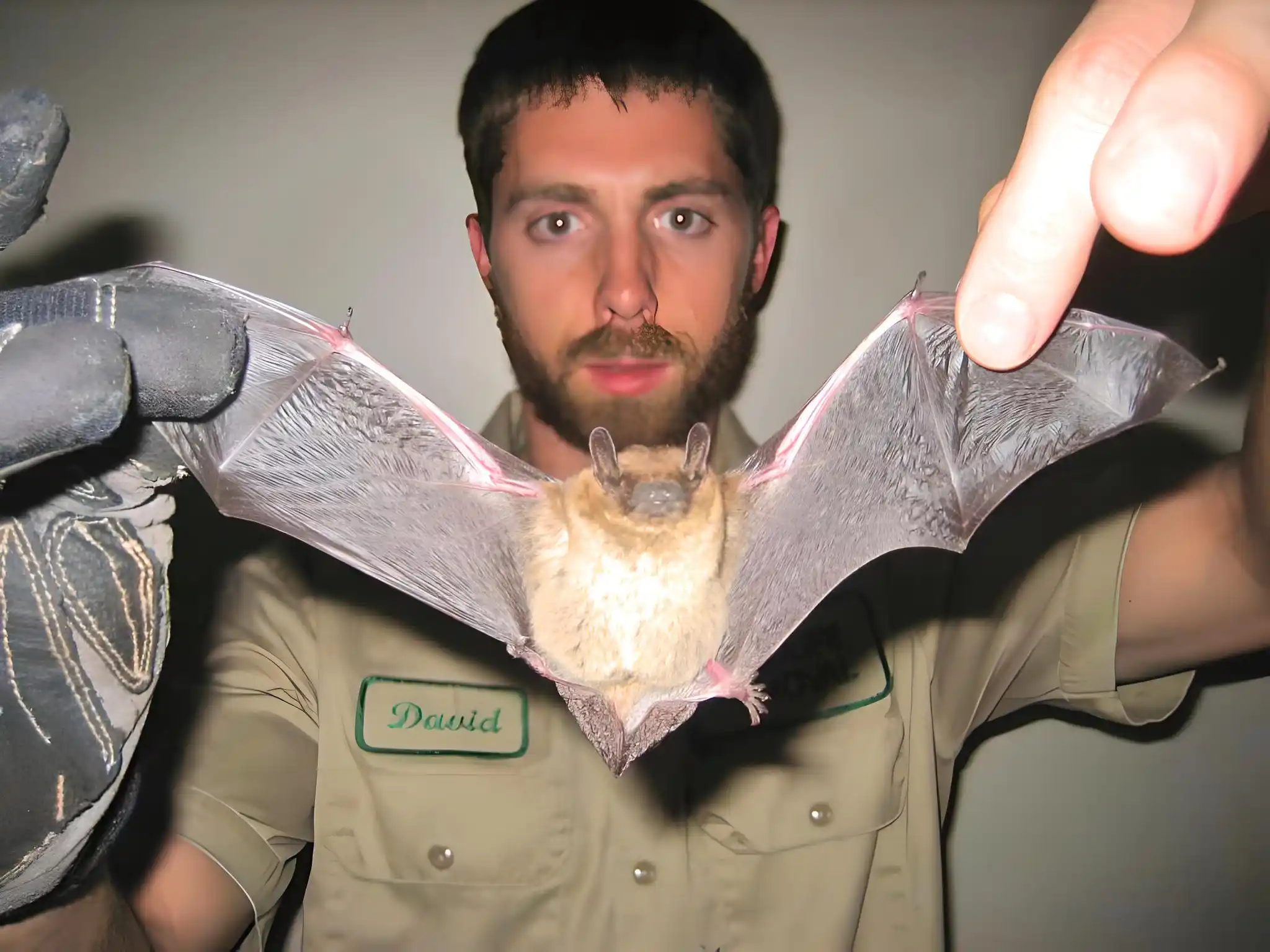
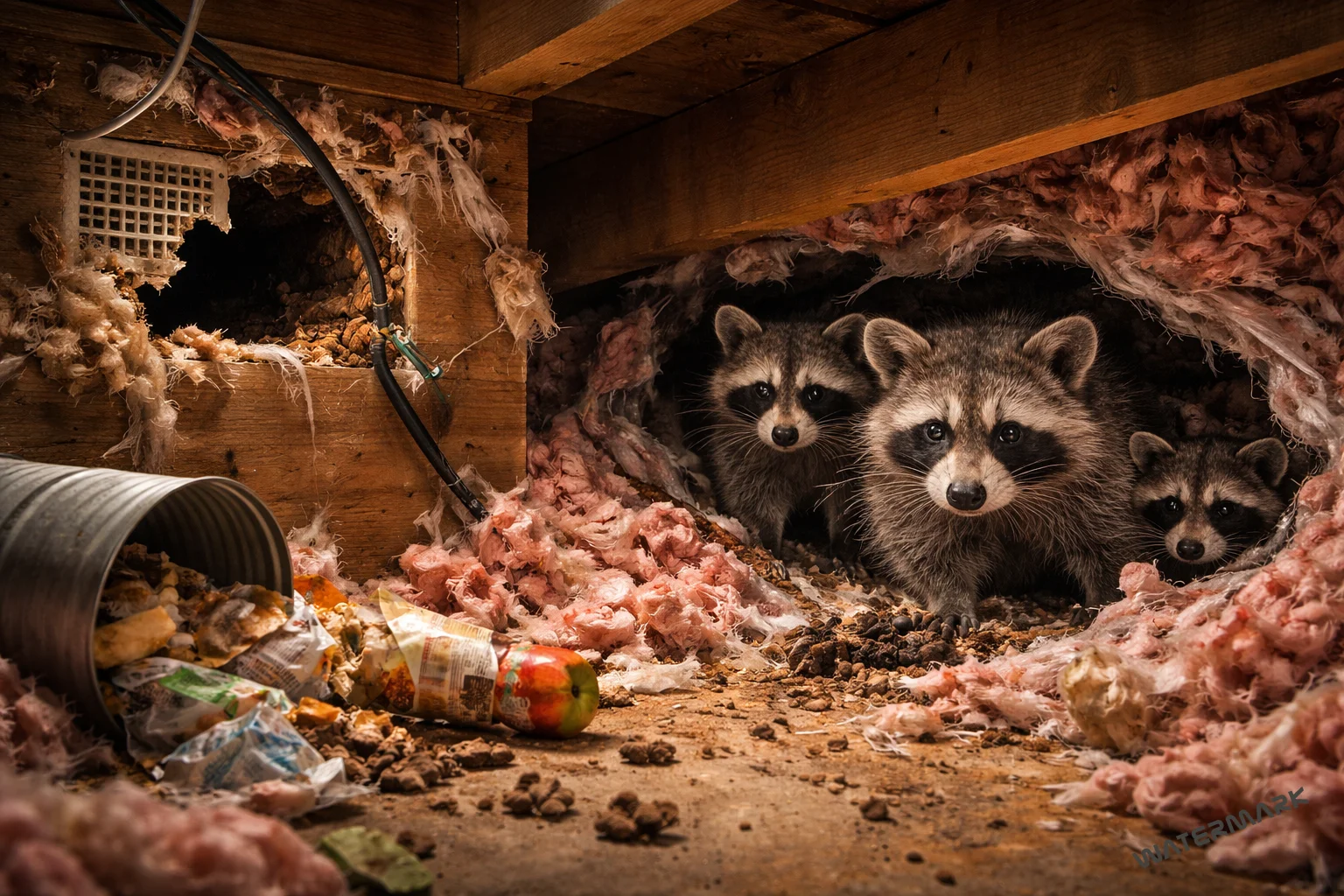
A strong, sharp, eye-watering ammonia odor usually means accumulated animal urine. Raccoon urine in attic insulation is the most common North Alabama source. Bat urine in long-occupied roost sites is the second.
What to do: the smell will not go away on its own — the contamination has to be removed. Sealing the animals out without removing the contaminated insulation leaves the odor in place for years. See our attic restoration process for what proper cleanup looks like.
Smell 2: musky, skunky (active skunk)
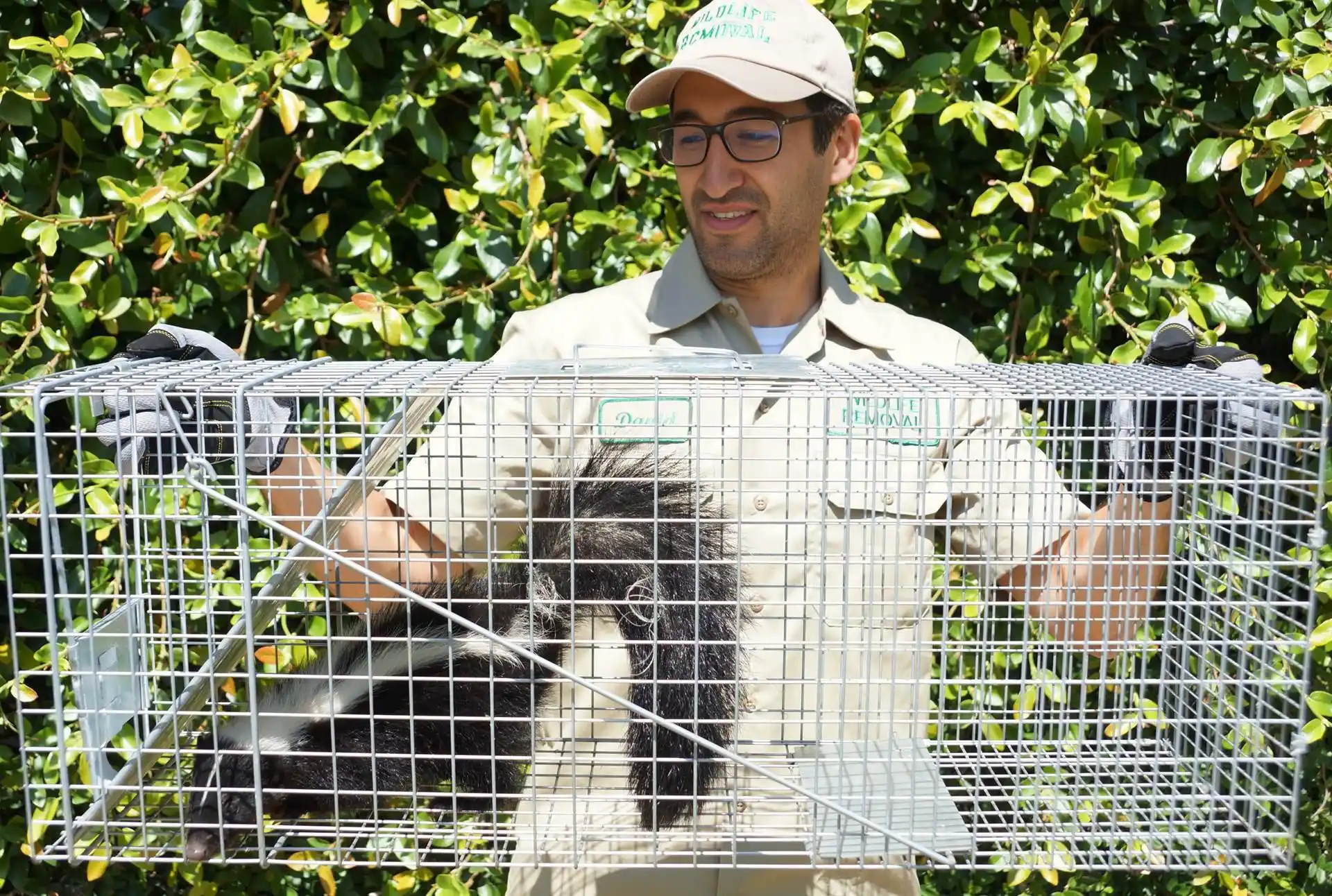
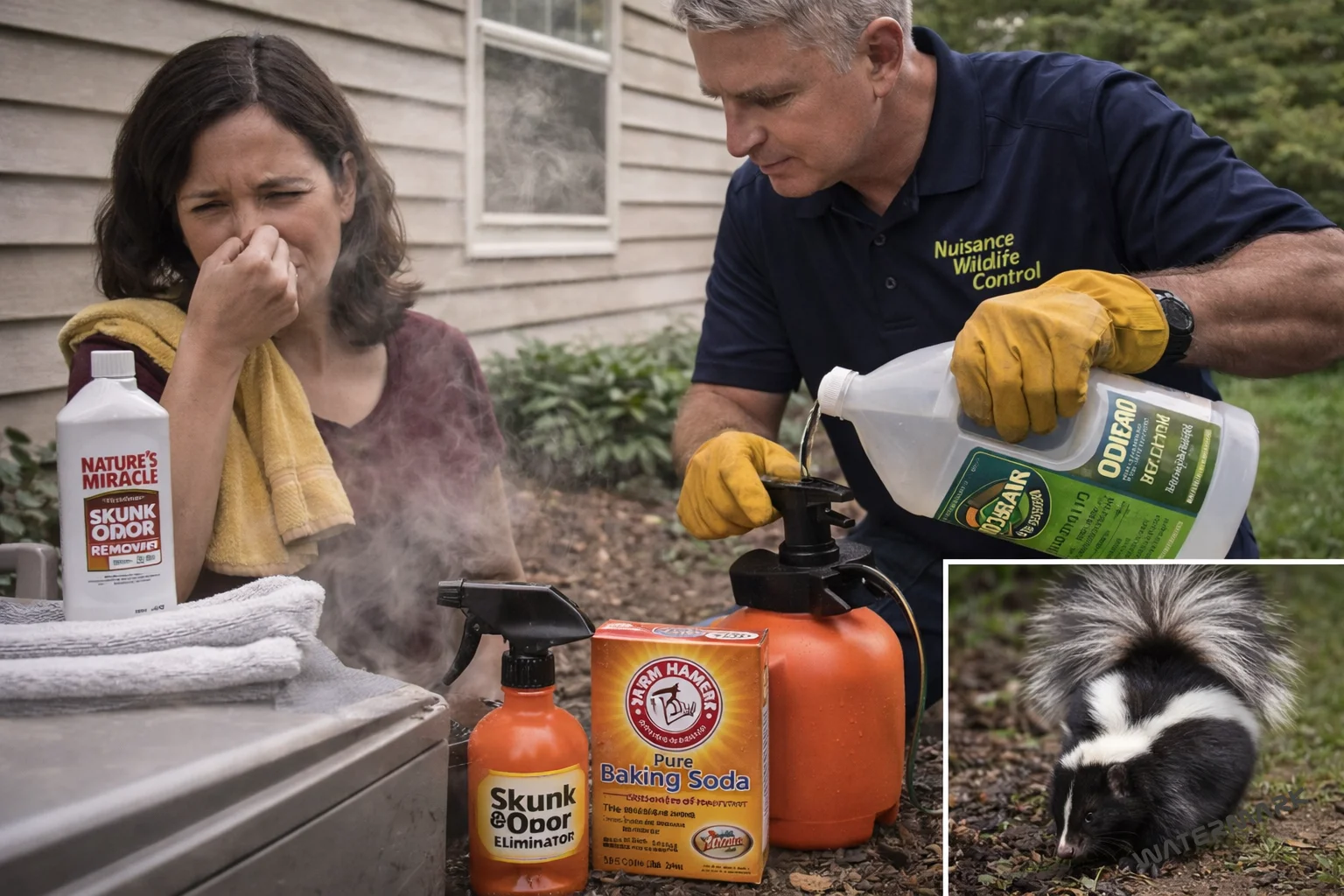
If you smell skunk in or around the house but no one was sprayed, you almost certainly have a skunk denning under a porch, deck, shed, or crawlspace nearby. Skunks emit a low-level musky odor without spraying when they're active in a den site.
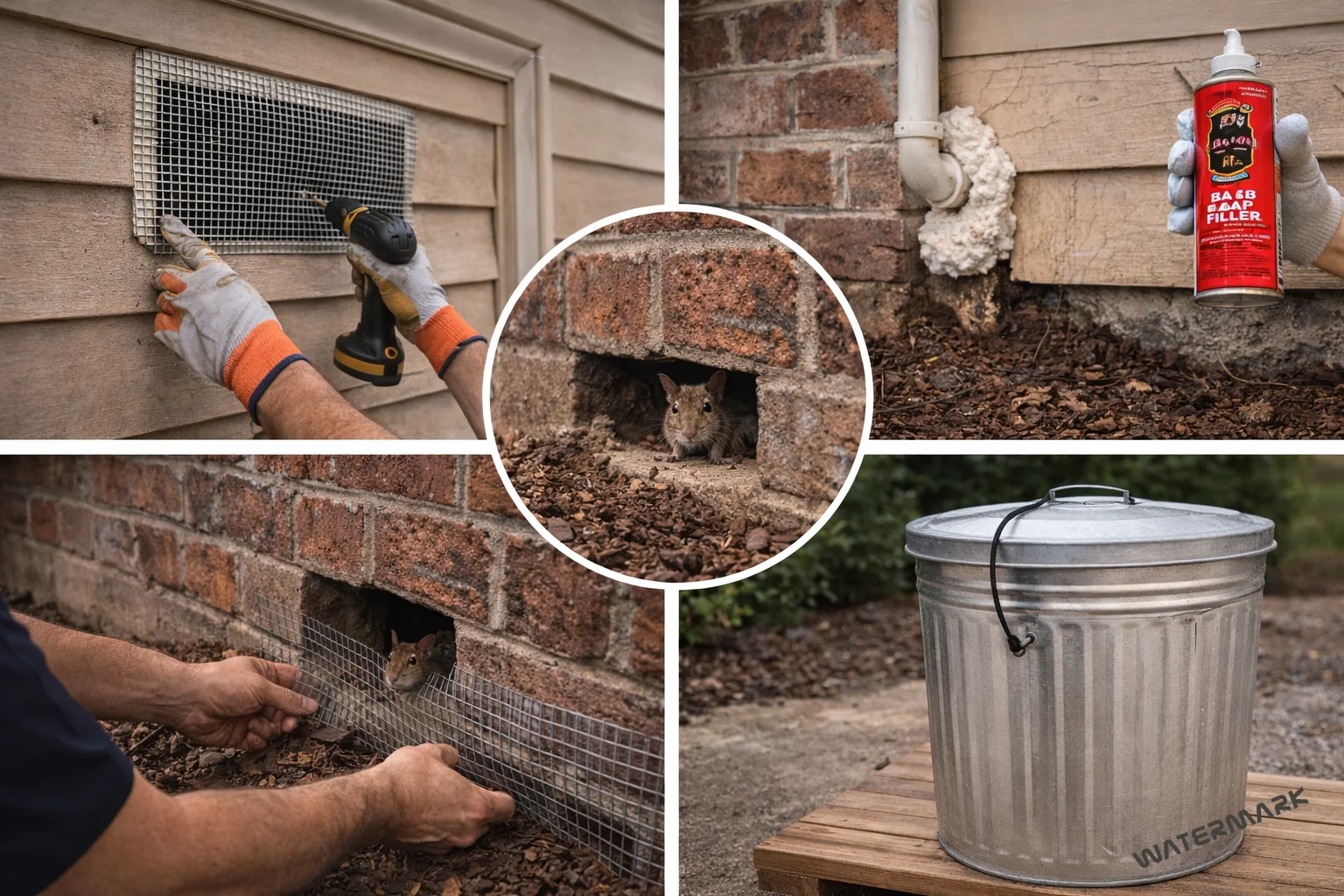
What to do: identify the den entrance from the outside (look for digging, fresh dirt, a worn path). Do not try to seal it shut — skunks may be inside, and trapping a skunk results in spray. Professional skunk removal includes the right approach to den exclusion without triggering spray.
Smell 3: heavy, sweet, putrid (dead animal)
This is the smell every homeowner hopes it isn't. A dead mouse smells for about a week. A dead rat smells for two to three weeks. A dead raccoon smells for a month or more — and the odor is significantly more intense and unpleasant.
What to do: the only resolution is locating and removing the carcass. Air fresheners don't work; the smell continues until the source is removed. We get these calls weekly. The most common scenarios:
- A homeowner sealed an attic entry while an animal was still inside.
- An animal entered the wall cavity and couldn't get back out.
- Pest-control bait killed a rodent in the wall (we never use this for that exact reason).
Locating dead animals in walls requires patience, sometimes a small inspection camera, and occasionally cutting drywall. We do this work.
Smell 4: musty, mushroom-like (mold from waste contamination)
Wildlife waste in insulation can lead to mold, particularly if there's also a moisture source nearby (a small roof leak, condensation from poorly-sealed ductwork). The smell is musty rather than ammonia-sharp.
What to do: the wildlife issue and the moisture issue both need attention. Cleanup includes contaminated material removal and addressing the moisture source.
Smell 5: low-grade barnyard / wet-dog
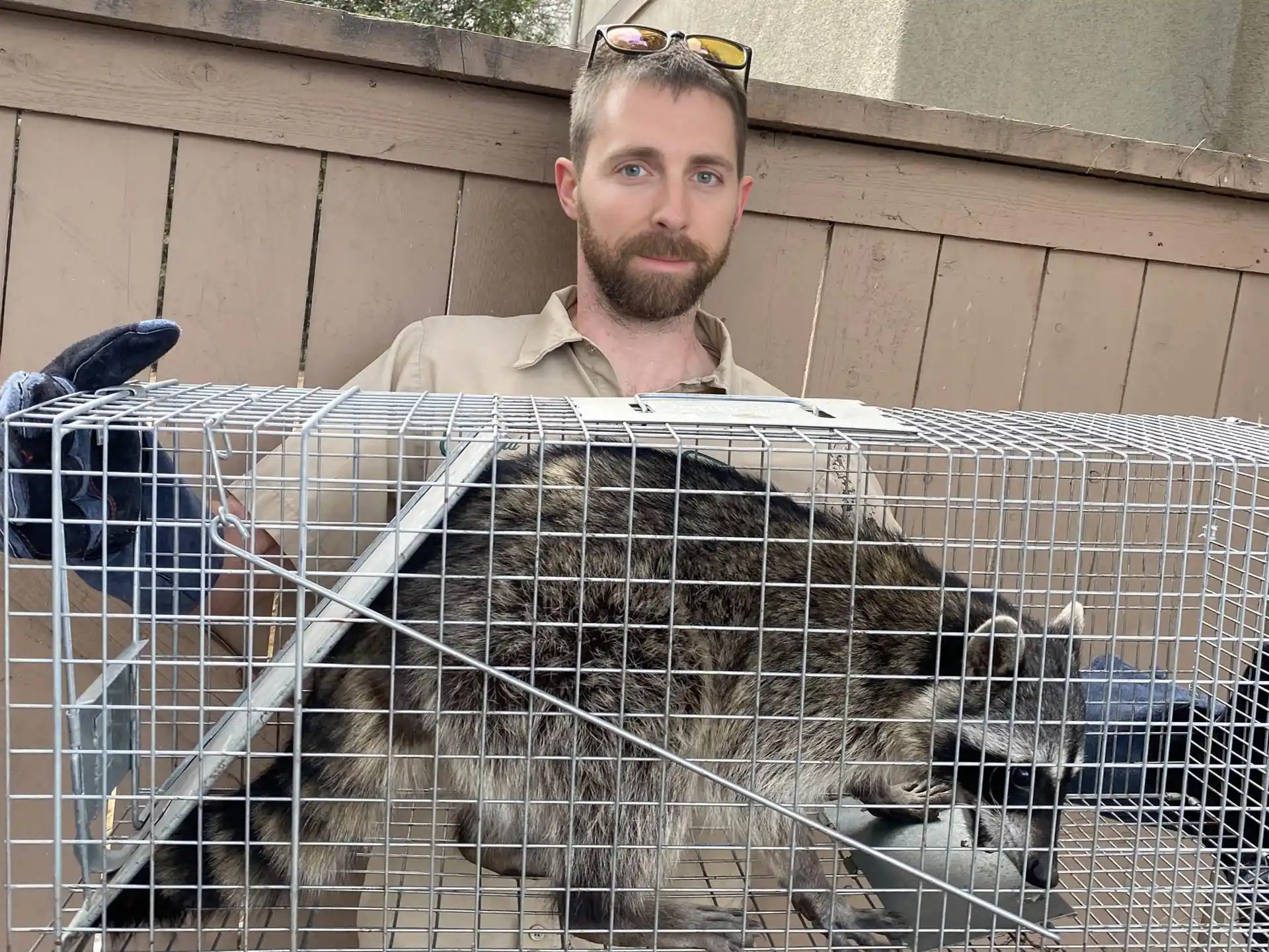
An active raccoon presence in an attic gradually accumulates a distinct barnyard or wet-dog smell — a combination of fur oils, food scraps, and ongoing waste. It's different from the sharp ammonia of pure urine accumulation; it's earthier and more layered.
What to do: raccoon removal followed by latrine cleanup and decontamination. The smell will resolve over a few weeks once contamination is gone.
Where the smell lives
Wildlife odors concentrate in three places:
- Insulation. Especially blown-in fiberglass and cellulose, which absorb urine readily.
- Wood structural elements. Rafters and sheathing exposed to long-term urine.
- HVAC ductwork. If wildlife damaged ducts or contaminated the area near return-air grilles, the smell distributes through the home with every cycle. This is also the most aggressive scenario — duct contamination affects air quality.
What it takes to remove the smell
There is no shortcut. The contaminated material has to come out. Affected surfaces have to be treated with appropriate anti-microbial. Insulation usually has to be replaced. Air-side ductwork has to be cleaned or replaced. We document each step for insurance and for your own records.
If you're smelling something and you've ruled out the obvious (dead mouse near a bait station, neighbor's skunk encounter, gas leak — please rule out gas leaks first), give us a call. Phone consult is free; on-site inspection is free.